The Great Divide in American Higher Education Outcomes
The American employment landscape has become increasingly challenging for recent college graduates, particularly those from Generation Z. Young degree holders, emerging from universities with significant ambition and often substantial student debt, are encountering a reality of delayed job offers, cautious hiring managers, and an economic environment that prioritizes proven experience over youthful potential.
Across university campuses and digital discussion forums, the long-held belief that a college degree automatically translates into career stability and financial security is showing significant signs of erosion. Students and graduates alike are questioning the traditional educational pathway as entry-level opportunities become more competitive and less certain.
Elite MBA Programs Defy the Broader Trend
However, at the highest levels of graduate business education, a completely different narrative is unfolding with remarkable consistency. For graduates of prestigious Master of Business Administration programs, the return on educational investment remains exceptionally strong and resilient.

Even as skepticism grows about the broader value of higher education, the top-tier business schools continue to deliver salary packages, professional networks, and career advancement opportunities that few other credentials can realistically match in today's economy.
A Tightening Market and a Strengthening Credential
Throughout the United States, entry-level hiring has noticeably slowed across many industries, forcing recent graduates to significantly temper their employment expectations and salary requirements. Yet at the summit of business education, career outcomes remain formidable and largely unaffected by these broader market trends.
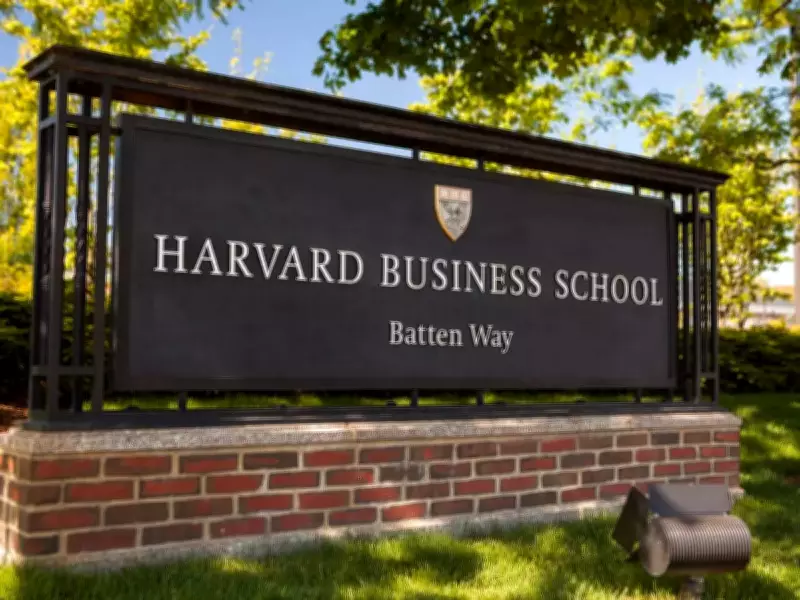
According to comprehensive data from the Financial Times, three years after graduation, alumni of Harvard Business School reported median earnings of approximately $260,000. At the Wharton School of the University of Pennsylvania, the comparable figure stood at an impressive $248,000. Graduates of MIT Sloan School of Management followed closely behind with median earnings of $246,000.
These substantial numbers represent not merely incremental salary improvements but rather structural elevation in earning power that distinguishes elite MBA graduates from their peers in the general job market.
The Recruitment Pipeline: From Campus to Corporate Leadership
Prestigious MBA programs accomplish much more than simply teaching advanced finance or strategic management concepts; they systematically embed students into powerful recruitment ecosystems that connect directly with high-paying industries.
Lucrative fields including management consulting, investment banking, and private equity continue to draw their talent heavily from a concentrated cluster of elite business institutions. Major firms such as McKinsey & Company, Bain & Company, JPMorgan Chase, and Goldman Sachs maintain established recruitment relationships with these campuses, creating a dependable conduit into prestigious, high-compensation roles.
Among Harvard Business School's Class of 2025, an impressive 90% of graduates received at least one job offer within three months of completing their degree, with 84% accepting positions. Both statistics marked measurable improvements over the previous two academic years, signaling remarkable resilience even as entry-level hiring softened in other sectors of the economy.
Across other members of the so-called "Magnificent 7" business schools—including Chicago Booth School of Business, Columbia Business School, Northwestern Kellogg School of Management, and Stanford Graduate School of Business—median base salaries within three months of graduation ranged from approximately $175,000 to $185,000, demonstrating consistent premium compensation.
Criticism, Skepticism, and Sustained Demand
The MBA degree has not been immune to criticism or questioning from various quarters. High-profile executives including Elon Musk and Peter Thiel have publicly challenged hiring decisions based primarily on academic credentials, arguing persuasively that practical innovation and execution capability often matter more than formal degrees in today's dynamic business environment.

Yet application trends and enrollment data tell a significantly different story about market demand. According to comprehensive research from the Graduate Management Admission Council, MBA applications increased by 13% in 2024 and grew by another 2% in 2025. Even in an era of growing doubt about traditional education pathways, demand for elite business degrees has persisted and even strengthened.
The Network Dividend and Long-Term Value
Barbara Coward, founder of MBA 360 Admissions Consulting, described entry into a top-tier business program as gaining access to what she called "an elite club of industry-wide influencers and changemakers" in comments to the Associated Press. The value of these professional networks, though often intangible and difficult to quantify, frequently proves decisive in career advancement and opportunity creation.
Alumni communities at these prestigious institutions extend deeply into corporate boardrooms, investment committees, entrepreneurial ventures, and government agencies. The MBA's fundamental promise, therefore, encompasses not only immediate salary gains but also strategic long-term positioning within influential professional circles that can shape entire industries.
A Tale of Two Educational Experiences
The contrast between undergraduate and elite graduate business education has become increasingly stark and significant. At the undergraduate level, students are increasingly weighing alternatives including specialized certifications, apprenticeships, and direct-to-work routes against rising tuition costs and uncertain returns.
At the elite MBA level, however, the advanced degree continues to function effectively as a gateway to high-margin business sectors and accelerated career mobility. The economic equation is not universal across all graduates; industry selection, timing, and individual capability remain decisive variables in career outcomes.
But for those fortunate enough to gain admission to the upper tier of business education and strategically align themselves with high-growth fields, the financial return appears remarkably resilient and substantial. In a labor market increasingly defined by caution and selectivity, the elite MBA endures not as a relic of outdated credentialism, but as a carefully recalibrated instrument of professional advantage and economic mobility.