The Directorate General of Civil Aviation (DGCA) has issued a crucial advisory circular specifically targeting students from India who are considering pursuing pilot training overseas. This circular serves as a stark warning, emphasizing that the regulatory body bears no responsibility whatsoever for the operational standards, educational quality, or safety protocols of foreign flying schools, even though licenses obtained from these institutions might be eligible for conversion into Indian licenses at a later stage.
Key Advisory Points for Students and Parents
In its detailed communication, DGCA strongly advises students and their parents to exercise extreme caution and conduct thorough independent verification before committing to any foreign Flying Training Organisation (FTO). The circular outlines several critical areas that require careful scrutiny.
Essential Verification Checklist
- Approval Status: Confirm that the FTO is officially approved by the national aviation regulator of the host country.
- Safety Record: Investigate the institution's history of safety incidents and compliance with international aviation standards.
- Training Quality: Assess the curriculum, instructor qualifications, and training facilities through reliable sources.
- Fee Structure: Understand all costs involved, including hidden charges and payment schedules.
- Refund Policies: Review terms regarding fee refunds in case of course discontinuation or other issues.
- Contractual Terms: Carefully examine all legal agreements and obligations before signing any documents.
Licence Conversion Provisions and Limitations
The circular reiterates that pilot licenses issued by civil aviation authorities of International Civil Aviation Organisation (ICAO) member nations remain eligible for conversion into Indian licenses. This provision has understandably encouraged a significant number of Indian students each year to enroll in overseas FTOs that hold approval from their respective national regulators.

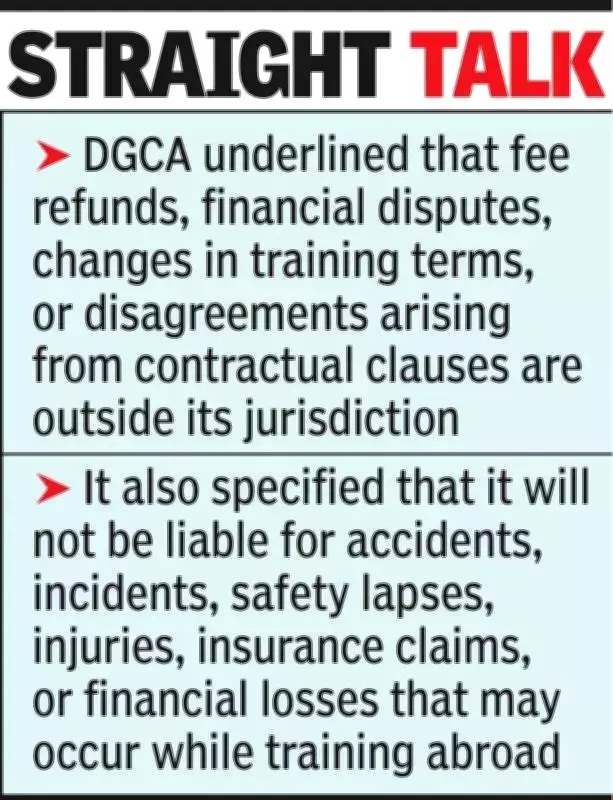
However, DGCA makes a crucial clarification regarding its jurisdictional limitations. The regulatory authority emphasizes that its role strictly ends with the technical process of license conversion. It explicitly states that DGCA does not extend its monitoring or regulatory oversight to any aspect of the training undertaken outside India's geographical boundaries.
Explicit Disclaimers and Student Responsibilities
In perhaps the most significant part of the advisory, DGCA outlines specific scenarios where it maintains complete non-involvement. The circular clearly states that various operational challenges students might face during their overseas training fall entirely outside DGCA's purview.
These include:
- Delays in training schedules or program completion
- Insufficient flying hours or incomplete training modules
- Unexpected interruptions in the training timeline
- Administrative hurdles or bureaucratic obstacles
- Changes in training programs or institutional policies
DGCA categorically states that all such matters represent "entirely matters between the student and concerned foreign institution" with "no involvement of DGCA India." This unambiguous language serves as a critical reminder that students assume full responsibility for their overseas educational experiences.
Broader Implications for Aviation Education
This advisory comes at a time when increasing numbers of Indian students are seeking pilot training opportunities abroad, often attracted by perceived advantages in cost, availability, or program structure. The circular represents DGCA's effort to establish clear boundaries of responsibility while encouraging informed decision-making among prospective aviation professionals.
The regulatory body's position underscores the importance of due diligence in international education choices, particularly in high-stakes fields like aviation where training quality directly impacts future career prospects and, ultimately, passenger safety. Students must now approach foreign pilot training with heightened awareness of both the opportunities and risks involved.