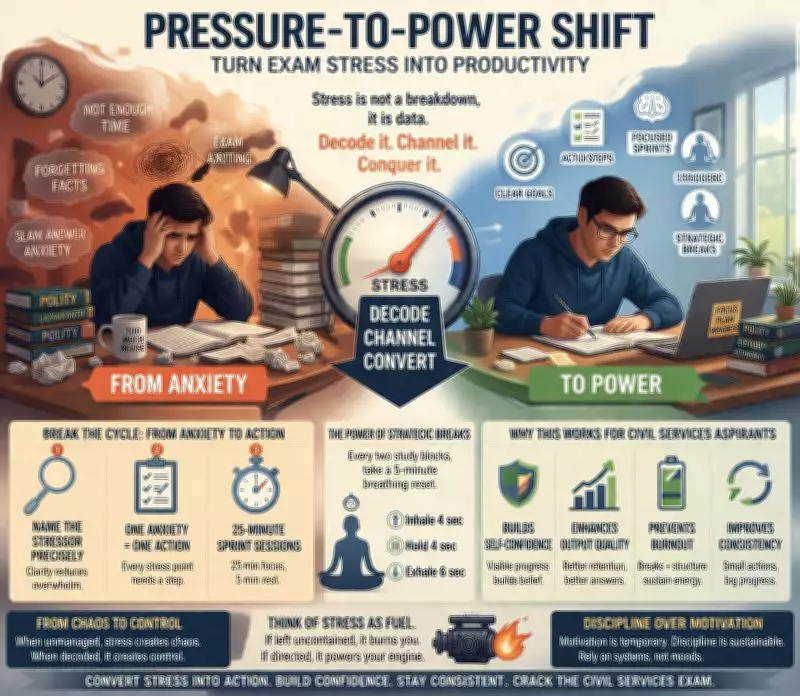
UPSC Aspirants: Mastering the Art of Turning Pressure into Productive Power
Every individual preparing for the Civil Services examination inevitably encounters significant levels of stress and pressure. This intense emotional and mental state is a universal experience among UPSC candidates across India. However, the critical distinction between those who ultimately achieve success and those who experience burnout does not lie in the presence of stress itself, but rather in how each aspirant chooses to interpret and respond to it.
Understanding Stress as Valuable Data, Not a Breakdown
Psychological research and expert coaching consistently emphasize that stress should not be viewed as a sign of impending failure or mental collapse. Instead, it functions as crucial data and feedback from your own cognitive system. When you feel the familiar sensations of exam pressure—increased heart rate, heightened alertness, or racing thoughts—your brain is actively signaling what matters most to you at that moment.
This physiological and psychological response evolved as a survival mechanism, preparing humans to face important challenges. For UPSC aspirants, this means your stress response is actually highlighting the significance you place on your Civil Services goals and the deep commitment you have to your preparation journey.

Proven Mental Strategies for Conversion
Successful candidates employ specific mental frameworks to transform this raw stress energy into focused, productive action:
- Reframe Your Perspective: Begin by consciously shifting your internal dialogue from "I am stressed about this exam" to "My body and mind are preparing me for an important challenge." This cognitive reframing changes stress from an enemy to an ally.
- Channel Energy into Structured Action: Create detailed study schedules that break overwhelming syllabus into manageable daily tasks. When stress arises, redirect that energy toward completing the next specific item on your plan rather than worrying about the entire examination.
- Develop Mindfulness Practices: Incorporate brief meditation sessions, deep breathing exercises, or focused attention techniques into your daily routine. These practices help regulate the physiological stress response while improving concentration during study hours.
- Build Progressive Confidence: Each time you successfully convert anxious energy into productive study time, you reinforce neural pathways that associate pressure with capability rather than fear. This builds authentic self-confidence that sustains through the lengthy preparation period.
The Productivity Advantage
When UPSC aspirants learn to interpret stress signals as motivation rather than threat, they unlock significantly higher levels of study output. The same adrenaline that might cause paralysis in some candidates becomes the driving force for extended focused sessions in others. This transformed relationship with pressure creates a sustainable preparation rhythm that prevents burnout while maximizing retention and understanding of complex subjects.
Expert educators in Chandigarh and across premier coaching centers emphasize that this mental shift represents one of the most significant differentiators between average and exceptional Civil Services preparation. By viewing stress as data indicating importance rather than as a warning of failure, aspirants position themselves to utilize their full cognitive and emotional resources throughout the demanding UPSC journey.
The ultimate transformation occurs when candidates stop fighting their stress response and instead learn to harness its energy. This creates a powerful upward spiral where pressure fuels productivity, productivity builds confidence, and confidence reduces future anxiety—establishing a virtuous cycle that supports success not just in the examination hall, but throughout an entire career in public service.