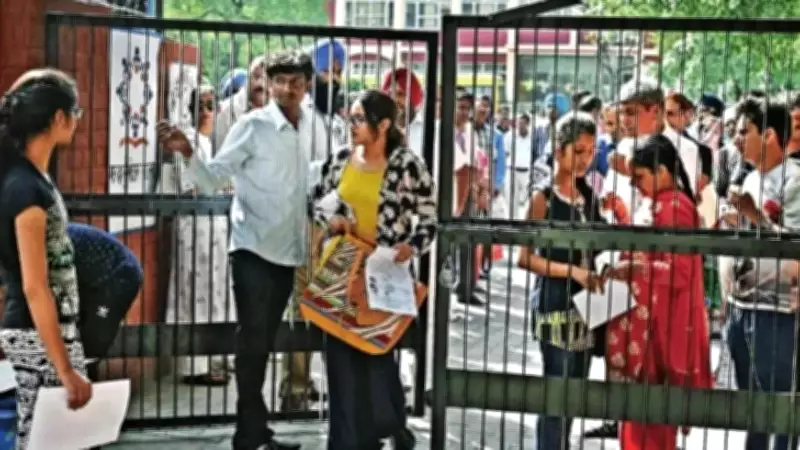
As the JEE exam approaches, maintaining composure and sharpness is crucial. Here are effective last-minute strategies to help you stay exam-ready.
Use Old Papers Wisely
Solve as many previous question papers as possible, including coaching daily practice papers (DPPs), mock tests, online PDFs, and revision booklets. Every unsolved question is a missed opportunity to understand patterns, concepts, or personal weaknesses.
Avoid New Material Before the Exam
In the final phase, do not chase new books or study resources. Focus on revising what you have already studied—formulas, concepts, marked questions, mistakes, and short notes.

Every Topic Matters
Do not assume some topics are more important than others. In JEE, every topic carries weight. Revise thoroughly and practice questions from all sections. An unexpected question can unsettle your confidence in the exam hall.
Simulate the Real Exam
Practice under real exam conditions multiple times. Sit for three hours with a timer, without phones, breaks, or distractions. Repeated simulation helps remove fear and builds confidence before the actual exam.
Start from the Basics
Do not jump straight to shortcuts and tricks. Begin every question by identifying the basic concept—formula, definition, theorem, reaction, graph, or standard result. Most difficult JEE questions are not new; they are smart combinations of basic concepts.
Create Your Own Strategy
No one knows you better than you. Know your strengths and decide your own approach. Some students prefer starting with their strongest subject to build momentum, while others tackle difficult sections first when the mind is fresh. Experiment during mock tests and finalize a strategy that suits you best.
Know When to Leave a Question
This is one of the most important exam skills. If a question consumes too much time, move on and return later if needed. Spending 15 minutes on one problem can disrupt your entire paper. A good student knows how to solve; a smart candidate knows when to move ahead.
JEE Tests Mental Strength Too
JEE is not only about concepts and formulas. It tests patience, pressure, and emotional control. Train your mind: sleep well, take breaks, stay connected with people, and do not let one poor mock test affect your confidence.
Don’t Hesitate to Ask for Help
Leaving a doubt unresolved is worse than asking for help. Approach teachers, friends, or seniors whenever you get stuck. The goal is clarity, not ego.
Think Beyond IIT
Remember why you started—to become an engineer. Cracking JEE is not the destination. Keep your larger career goals in mind.
Don’t Predict, Just Prepare
JEE often surprises students. Avoid wasting time predicting paper patterns or focusing only on selective question types. Strengthen your basics and stay prepared for whatever appears in the exam.
Compete with Friends
Always compete with your peers, but do not get jealous or insecure. Learn from friends who score better, and if you perform well, push yourself further. Healthy competition can motivate you to improve.
IIT is a Start, Not the Finish Line
The IIT tag can provide a strong beginning, but long-term success depends on skills and problem-solving ability. Work hard for JEE, but if the result is not as expected, do not stop. Success does not look at tags.
JEE Is Important, but Life Is Bigger
JEE is an important exam, but it does not define your entire life. There are many paths to success, and life keeps opening new opportunities for those who continue to work hard and move forward.
(The writer is co-founder of a start-up and president of IIT Hyderabad Alumni Association)