Bihar Court Recruitment Exam Row: Dog's Photo on Admit Card Shocks Candidate
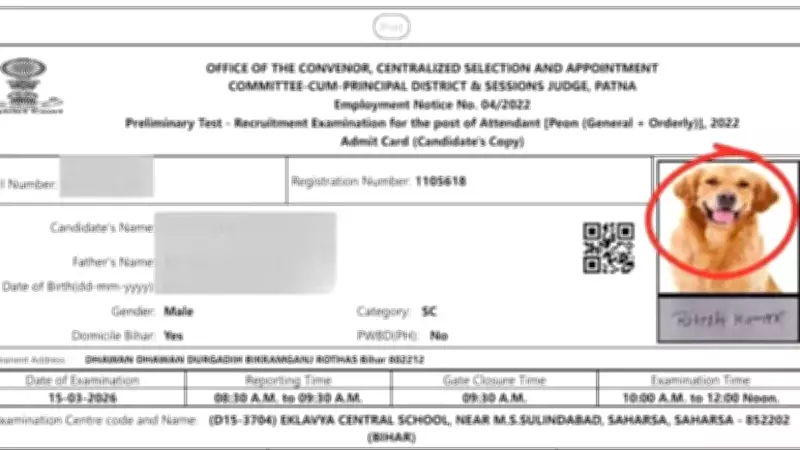
A candidate applying for a Bihar court recruitment exam was left in utter shock and disbelief when he discovered that his admit card featured a photograph of a dog instead of his own image. This bizarre administrative error has sparked a major controversy, raising serious questions about the efficiency and oversight in the examination process conducted by the Bihar government.
Details of the Incident
The incident came to light when the candidate, whose identity has not been disclosed, received his admit card for the upcoming court recruitment examination. Upon reviewing the document, he was stunned to find that the photo slot displayed an image of a dog rather than his personal photograph. This glaring mistake has not only caused personal distress to the candidate but has also highlighted potential flaws in the verification and issuance procedures for such critical documents.
The admit card is a mandatory document for appearing in any competitive exam, and such errors can lead to significant complications, including disqualification or denial of entry at the examination center. The candidate immediately raised the issue with the concerned authorities, demanding an explanation and a corrected admit card to avoid any disruption to his participation in the exam.

Administrative Lapses and Public Outcry
This incident has triggered widespread criticism from the public and aspirants, who are expressing concerns over the administrative lapses in the recruitment process. Many have taken to social media and other platforms to voice their frustration, citing similar past incidents where errors in admit cards or other exam-related documents have caused undue hardship to candidates.
Such mistakes undermine the credibility of the examination system and erode trust in government-run recruitment drives, especially in a state like Bihar, where job opportunities are highly sought after. The error has prompted calls for a thorough investigation into the matter, with demands for accountability from the officials responsible for the admit card issuance.
Response from Authorities
As of now, the Bihar government and the court recruitment authorities have acknowledged the error and assured that they are looking into the matter. Preliminary reports suggest that the mistake might have occurred due to a technical glitch or human error during the data entry or photo upload process. Officials have promised to rectify the admit card promptly and ensure that such incidents do not recur in the future.
However, this assurance has done little to quell the growing anger among candidates, who are urging for more stringent checks and balances in the system. They emphasize the need for better quality control and verification mechanisms to prevent such embarrassing and problematic errors.
Broader Implications for Recruitment Exams
This incident sheds light on the broader challenges faced in recruitment exams across India, where administrative inefficiencies can have serious repercussions for candidates. Key issues include:
- Lack of proper verification processes for admit cards and other documents.
- Inadequate technical infrastructure leading to errors in data handling.
- Delayed responses and rectifications from authorities, causing anxiety among aspirants.
Experts argue that such incidents not only affect individual candidates but also tarnish the reputation of the recruitment bodies, potentially discouraging future applicants. They recommend implementing automated systems with multiple layers of verification to minimize human error and ensure accuracy in all exam-related procedures.
Conclusion
The Bihar court recruitment exam row over a dog's photo on an admit card serves as a stark reminder of the administrative shortcomings that plague competitive examinations in India. While the authorities have pledged to address the issue, it underscores the urgent need for systemic reforms to enhance transparency, efficiency, and reliability in the recruitment process. Candidates deserve a fair and error-free experience, and it is imperative that such lapses are prevented to maintain the integrity of public examinations.