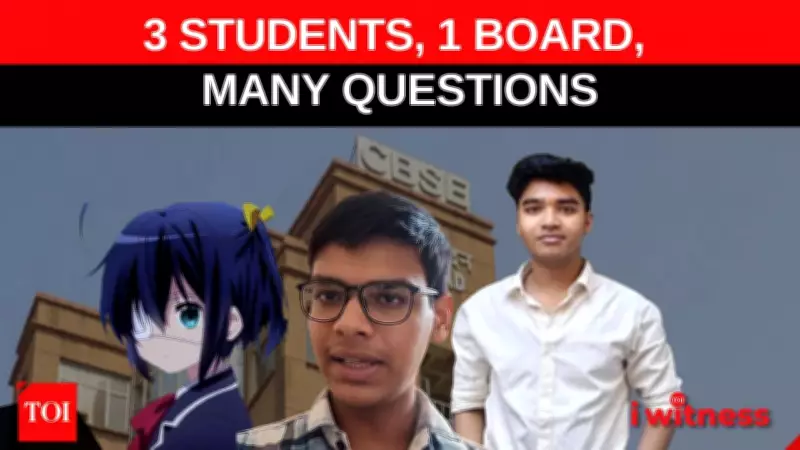
Three teenagers, Vedant Shrivastava, Sarthak Sidhant, and Nisarga Adhikary, have emerged as whistleblowers in the controversy surrounding the Central Board of Secondary Education's Class 12 On-Screen Marking (OSM) system. Their individual investigations uncovered critical issues that collectively forced the CBSE to address tough questions about transparency, accountability, and trust in India's digital examination processes.
Individual Discoveries
Vedant Shrivastava discovered that the CBSE had sent him the wrong answer sheet, raising doubts about the accuracy of the OSM system. Sarthak Sidhant delved into the tender process behind the OSM platform, uncovering potential irregularities in how the system was procured. Nisarga Adhikary claimed to have identified cybersecurity flaws in the marking portal, suggesting that the system was vulnerable to external threats.
Collective Impact
Their separate findings converged to form a larger narrative questioning the integrity of India's digital exam systems. The students, through their persistence and investigative efforts, highlighted the need for greater transparency and accountability in the CBSE's operations. Their work prompted the board to respond to concerns that had previously been overlooked.

TOI reporters interviewed the students to understand how they worked to raise critical questions for the CBSE. The students explained their methodologies, the challenges they faced, and the importance of holding educational authorities accountable. Their story is a testament to the power of youth activism in demanding systemic improvements.
The CBSE has since acknowledged the issues raised and has initiated steps to review its OSM system. However, the students continue to advocate for more robust safeguards to prevent future discrepancies. This case underscores the growing importance of digital security and transparency in India's education sector.