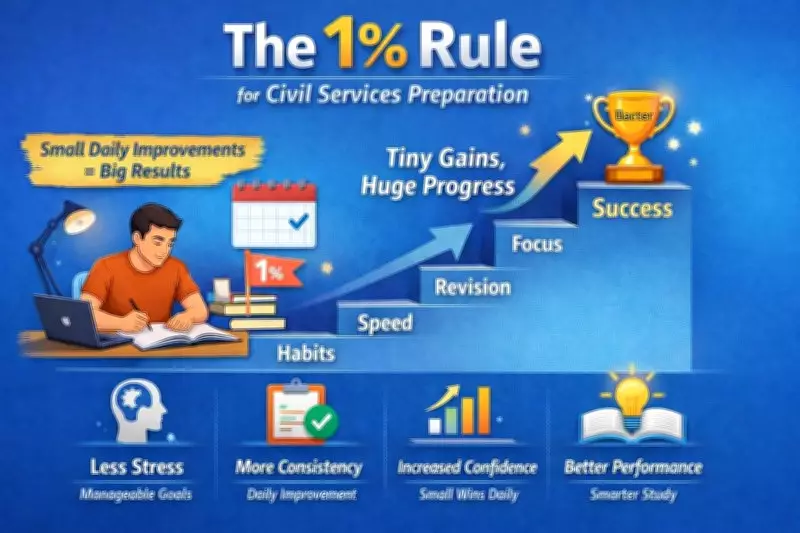
Master the 1% Rule: How Marginal Gains Can Transform Civil Services Preparation
Civil Services preparation is frequently perceived as an intense marathon demanding extreme discipline: 12-hour study days, flawless notes, and complete mastery of the entire syllabus. While this ambitious mindset appears commendable, it can rapidly become overwhelming and counterproductive for many aspirants.
The Overwhelming Reality of UPSC Preparation
Numerous Civil Services candidates begin their journey with strong determination and high energy levels, only to experience a significant loss of momentum over time. This decline often stems from three primary factors: severe burnout, escalating anxiety, and the pressure of maintaining unrealistic expectations throughout the lengthy preparation period.
The traditional approach to UPSC exam preparation emphasizes monumental efforts and perfectionism, which can create an unsustainable cycle of stress and diminishing returns for aspirants across India.

Introducing the Transformative 1% Rule Strategy
A practical and stress-free alternative strategy focuses on implementing the powerful 1% rule, also known as the philosophy of marginal gains. This approach centers on making small, consistent improvements across various aspects of preparation rather than pursuing dramatic overnight transformations.
By concentrating on achieving just 1% better performance each day in different areas, Civil Services aspirants can create compound growth that leads to substantial long-term results without the overwhelming pressure associated with conventional preparation methods.
Key Areas for Implementing Marginal Gains
Study Techniques and Knowledge Retention: Instead of attempting to master entire subjects in single sessions, focus on improving comprehension by just 1% daily through techniques like spaced repetition, active recall, and interleaved practice.
Time Management and Productivity: Enhance study efficiency gradually by optimizing your schedule, eliminating distractions, and implementing focused work sessions with strategic breaks to prevent mental fatigue.
Health and Well-being: Small improvements in sleep quality, nutrition, physical activity, and stress management can significantly impact cognitive function, memory retention, and overall endurance throughout the demanding preparation period.
Answer Writing and Analytical Skills: Practice incremental improvements in structuring answers, developing arguments, and presenting information clearly rather than expecting immediate perfection in mock tests and practice sessions.
The Compound Effect of Consistent Small Improvements
When Civil Services aspirants apply the 1% rule consistently across multiple dimensions of their preparation, the compound effect creates remarkable transformation over time. A 1% daily improvement leads to being 37 times better over the course of a year, demonstrating the mathematical power behind this seemingly modest approach.
This strategy helps build sustainable momentum, enhances confidence through achievable milestones, and establishes consistency without the psychological burden of pursuing perfection from the outset.
Practical Implementation for UPSC Aspirants
- Identify Specific Areas for Improvement: Break down your preparation into manageable components including subject knowledge, current affairs, answer writing, and test-taking strategies.
- Set Achievable Daily Goals: Focus on making small, measurable improvements rather than attempting dramatic changes that are difficult to sustain.
- Track Progress Systematically: Maintain a simple journal or digital tracker to monitor your marginal gains and maintain motivation through visible progress.
- Celebrate Small Victories: Acknowledge and reward yourself for consistent improvements to reinforce positive habits and maintain psychological resilience.
By embracing the 1% rule philosophy, Civil Services aspirants can transform their preparation journey from an overwhelming marathon into a sustainable process of continuous improvement, ultimately enhancing their chances of success in one of India's most challenging examinations.