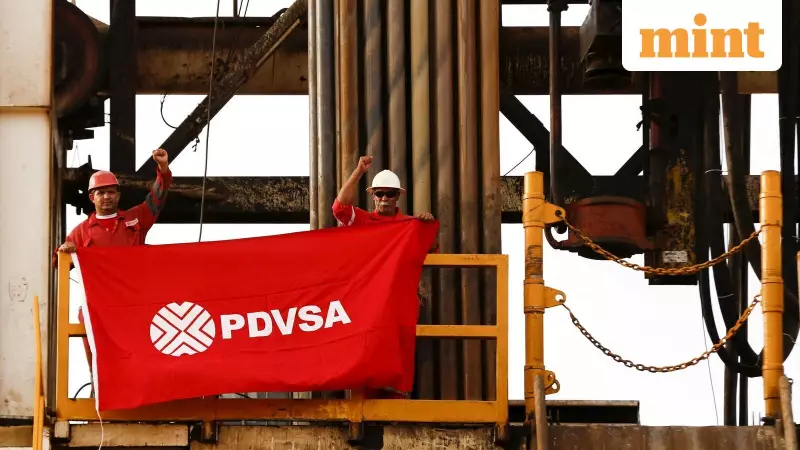
Global oil markets, already bracing for a surplus in 2026, face renewed pressure from geopolitical developments in Venezuela and Iran. These events threaten to inject additional supply into a system struggling with weak demand, potentially extending the crude price slump that defined 2025.
A Market Primed for Oversupply
Even before the recent moves in Caracas and Tehran, major forecasters were painting a bleak picture for oil. The International Energy Agency (IEA), the U.S. Energy Information Administration (EIA), and leading investment banks all converged on a prediction of a significant surplus for 2026. The consensus points to an excess of roughly 1.5 to two million barrels per day.
This outlook follows a difficult 2025, where crude prices plunged by about 20%. The decline was triggered as the OPEC+ alliance started to reverse its production cuts, releasing more oil into a market showing clear signs of fatigue. In response to falling prices, the cartel slowed its planned output increases and has recently held production steady, reducing its ability to manage any new barrels entering the market.

Growth is now being driven by non-OPEC nations. Supply increases from the United States, Brazil, Guyana, Canada, and Argentina are expected to be the dominant source of new oil through 2026. Meanwhile, global demand growth is forecast to remain modest, unable to soak up the incoming tide of crude.
Geopolitical Wildcards: Venezuela and Iran
The timing of the U.S. move to effectively take control of Venezuela's oil industry is critical. Venezuela sits on the world's largest proven reserves—over 300 billion barrels—but its current output is stranded near a meager one million barrels per day due to years of neglect and crumbling infrastructure.
While any meaningful production increase would require massive investment and political stability over several years, the mere prospect of U.S. involvement reshapes long-term expectations. For traders, it signals that a vast pool of supply, long considered off-limits, may now be in play.
Simultaneously, other sanctioned producers are reassessing their strategies. Iran presents a more immediate and flexible supply risk. Its crude exports have already rebounded to approximately 1.5 to two million barrels per day, near multi-year highs, largely flowing to China amid uneven enforcement of sanctions.
The regime in Tehran is under significant internal pressure. A deteriorating economy, marked by high inflation and a strained currency, has increased its dependence on oil revenue. Widespread antigovernment protests have amplified the need to relieve economic stress for ordinary citizens.
Analysts, including Matt Gertken, chief geopolitical strategist at BCA Research, suggest this could push Iran toward a more transactional foreign policy, focused on monetizing its energy resources rather than escalating conflicts. This shift wouldn't necessarily require a revived nuclear deal. Even looser enforcement of sanctions, limited waivers, or tacit tolerance from the U.S. could allow more Iranian oil to enter formal markets.
The Psychology of Scarcity Fades
The combined potential for more oil from Venezuela and Iran reinforces the market's expectation of a glut. Because Iran's oil infrastructure is in far better shape than Venezuela's, even modest policy adjustments could bring hundreds of thousands of barrels per day back to the market on a relatively short timeline.
The fundamental takeaway for traders is stark. Oil prices do not need a flood of new supply to fall further; they only need the widespread belief that scarcity is ending. As markets reopened, that belief was becoming increasingly difficult to ignore. The events of early January 2026 have provided fresh reasons to expect the surplus to grow, offering little hope for price relief in the near term.