US Tariff Hike Delivers Heavy Blow to Coimbatore and Tirupur Industries
Coimbatore and Tirupur, once bustling industrial hubs in Tamil Nadu, are now grappling with severe economic distress. The United States decision to increase tariffs on Indian goods to 50% in August last year has triggered a major crisis. These districts, which previously provided employment to several lakhs of workers from Tamil Nadu and other states, are witnessing a sharp downturn.
Massive Job Losses Rock Textile Sector
The textile industry in Coimbatore and Tirupur has been hit particularly hard. In just the past couple of months, nearly two lakh employees have lost their jobs. When we consider job losses in other key sectors like castings and valves, the total figure climbs to more than three lakh. This represents a devastating blow to the local workforce and economy.
S Dhanabalan, Vice-President of Apparel Export Operations and Business Development at Quantum Knits, a unit of KPR Mill Ltd, provides stark numbers. He reveals that annual exports to the US market from these regions previously stood at roughly $1.7 billion. "Now, it has been reduced by a billion," he states. Dhanabalan warns that if the 50% tariff continues, textile exports to the US could drop to zero within a year.

Export Competitiveness Takes a Nosedive
The tariff increase has made Indian products significantly more expensive in the US market. Dhanabalan explains that additional standard tariffs combined with the 50% hike are reflected in the delivered duty paid (DDP). This results in higher product costs. "The delivered duty paid to China and Bangladesh is comparatively lower by 30%," he notes. The situation makes Indian goods less competitive against products from these neighboring countries.
Industries Brace for Further Challenges
Business leaders are now expressing deep concern about potential additional tariffs. They fear that if US President Donald Trump's proposal to impose 500% tariffs on countries purchasing Russian oil becomes reality, the consequences could be catastrophic. "When 50% tariff itself is unthinkable, 500% is practically not possible," Dhanabalan remarks. He predicts that if current conditions persist, exports to the US will decline further and job losses will increase dramatically.
Casting and Valve Industries Face Looming Crisis
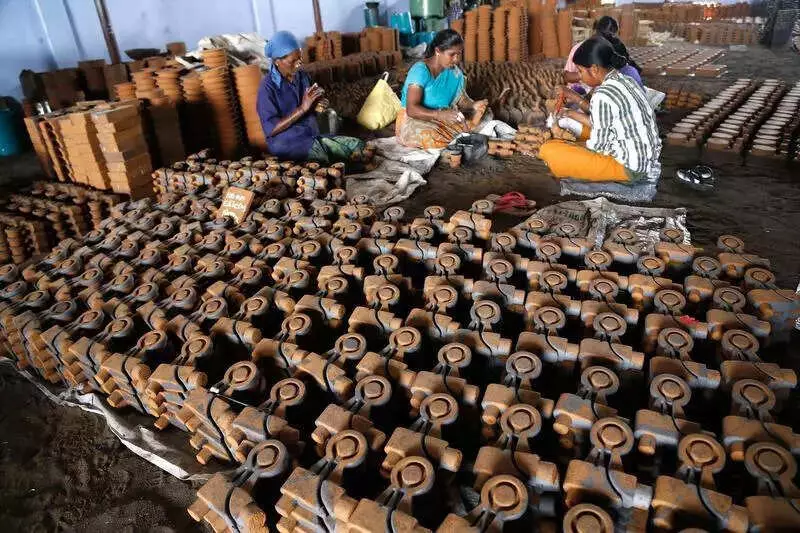
The impact extends beyond textiles to other manufacturing sectors. K Velusamy, Chairman of the Institute of Indian Foundrymen, Coimbatore chapter, highlights the coming challenges for casting and valve production. He anticipates about 50,000 job losses in this industry over the next few months. "Though the foundry industry hasn't seen a visible impact till now, it is expected to witness job losses soon," Velusamy states. He notes that contract workers will likely bear the brunt of these cuts.
Velusamy explains the particular difficulties facing the casting industry. While apparel manufacturers can shift markets relatively easily, casting firms face a more complex transition. "For castings, every firm has to first understand the demand, then design the manufacturing unit accordingly, and then begin production after a series of scrutiny," he describes. This entire process typically requires more than seven months to complete.
Coimbatore produces 1.2 tonnes of iron castings annually, with more than half exported. The US market accounts for 40% of these exports, making the tariff hike especially damaging to this sector.
Search for Alternative Markets Intensifies
Industry representatives are actively exploring new export destinations to reduce dependence on the US market. Dhanabalan suggests that India should strengthen its presence in European and UK markets as alternatives. He acknowledges that African, Middle Eastern, and other Asian markets are available but come with limitations. "African markets will be a bit challenging owing to their unreliability. The Asian markets are, meanwhile, small," he observes.

Pump Manufacturing Shows Resilience
Not all sectors are experiencing the same level of distress. K V Karthik, President of the Indian Pump Manufacturers Association, reports that the US tariff hike has not significantly affected pump manufacturing. "It predominantly serves the domestic market," he explains. Only two to three major companies rely heavily on US exports, and their businesses may face impacts.
The overall picture remains grim for Coimbatore and Tirupur. These industrial centers, which once drove regional economic growth, now confront an uncertain future as they navigate the challenging landscape created by international trade policies.