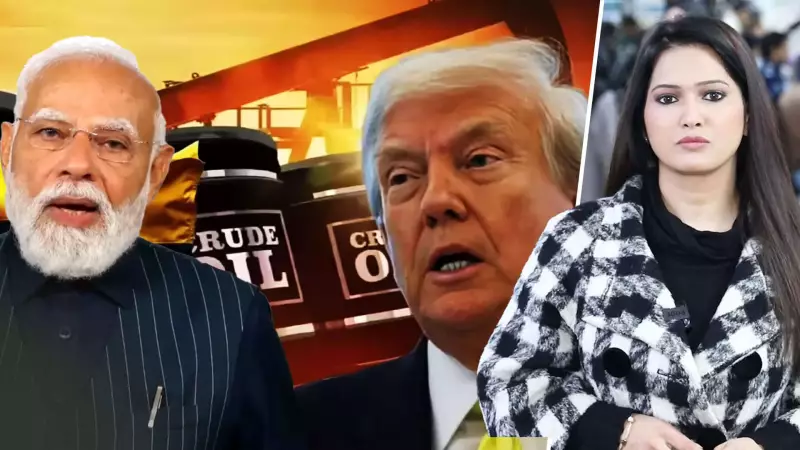
In a significant move that reshapes global energy diplomacy, the United States has extended a conditional offer to India, allowing it to resume purchases of Venezuelan crude oil. This development, reported on January 9, 2026, comes alongside Washington's continued pressure on New Delhi to curb its imports of sanctioned Russian oil. The offer represents a calculated shift in US strategy, attempting to provide India with an alternative energy source while tightening control over global oil revenues.
A Controlled Gateway to Venezuelan Crude
The US proposal is not a simple reopening of trade. Washington has indicated it will permit Indian purchases only through a US-controlled system designed to strictly monitor revenue flows and ensure enforcement. This framework is part of a broader recalibration of US-Venezuela relations, where America is now facilitating the global marketing of Venezuelan oil but insists on retaining ultimate oversight. For India, a nation that was once among the top buyers of Venezuelan heavy crude before sanctions, this offers a chance to tap into a familiar source that matches its sophisticated refinery capacity for processing such grades.
Diversification vs. Diplomatic Pressure
The US offer serves a dual purpose. On one hand, it acknowledges India's soaring energy demand and provides a potential avenue to diversify its supply portfolio. Access to Venezuelan crude could help mitigate risks associated with over-reliance on any single region. However, American officials have attached a clear, uncompromising condition: only oil transactions approved by Washington will be considered legitimate. Any deals made outside this sanctioned framework could face severe consequences, including sanctions or even seizures of cargo.

This move intensifies the complex energy triangle between the US, India, and Russia. The United States continues to actively pressure New Delhi to reduce its substantial imports of discounted Russian crude, a key element of India's strategy to manage inflation and energy costs since the Ukraine conflict. The Venezuelan offer appears as a strategic carrot, presented alongside the stick of ongoing scrutiny over Russian oil deals.
A Test for India's Strategic Autonomy
For Indian policymakers, this situation transcends mere energy procurement. It poses a direct test of India's principle of strategic autonomy in foreign policy. The nation must navigate an increasingly politicized and fragmented global energy market where major powers are using resource access as a tool of geopolitical influence. The decision involves weighing the benefits of a new, approved supply channel against the constraints of operating within a US-managed system, all while defending its right to engage in independent economic partnerships.
The outcome will signal how India balances its growing strategic partnership with the United States against its imperative for energy security and economic sovereignty. The choice made in response to this conditional offer will have significant ramifications for India's position in the evolving world order.