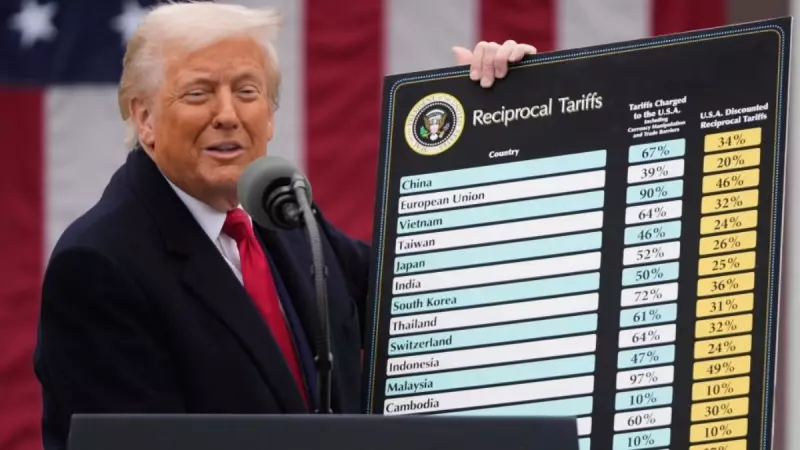
In a significant escalation of economic pressure, the United States has moved to impose a staggering 500 percent tariff on crude oil imports from Russia by nations including India and China. This decisive legislative action, which has reportedly received the backing of former President and current presidential candidate Donald Trump, targets a key financial artery for Moscow amidst the ongoing conflict in Ukraine.
The Bill and Its Key Provisions
The legislative measure, known as the "Bill to deter Russian oil purchases", was introduced in the US House of Representatives. Its primary objective is to cripple Russia's ability to finance its military operations by making it prohibitively expensive for other countries to buy its oil. The bill specifically names India and China, two of the world's largest energy consumers who have significantly increased their intake of discounted Russian crude since the onset of the war.
According to the provisions, any entity or vessel involved in transporting Russian crude oil sold above a price cap set by a coalition of Western nations would face the massive tariff upon entering US ports. More critically, the bill extends this penalty to third countries like India and China that refine Russian oil and then export derived petroleum products globally. This "secondary sanction" mechanism is designed to close a major loophole that has allowed Russian oil to continue flowing into world markets.

Political Backing and Strategic Intent
The political momentum behind this aggressive move is notable. Reports confirm that the bill has secured the crucial endorsement of Donald Trump. This support signals a potential bipartisan, or at least a cross-candidate, consensus in Washington on taking a harder line against nations perceived to be undermining Western sanctions on Russia. The move is framed not just as an economic measure but as a direct strategy to limit the war chest of the Kremlin.
Analysts suggest this is one of the most direct and punitive measures aimed at India's and China's energy trade with Russia to date. While the US and its G7 allies had previously instituted a price cap mechanism, enforcement has been challenging, and Moscow has developed a "shadow fleet" to circumvent these restrictions. The 500% tariff threat represents a more unilateral and forceful approach by the United States to compel compliance.
Potential Repercussions for India and Global Markets
The implications for India are substantial. India has emerged as one of the largest buyers of Russian seaborne crude, leveraging discounted prices to control its import bill and domestic inflation. A tariff of this magnitude, if enforced, could severely disrupt this economic arrangement. It could force Indian refiners to seek alternative, more expensive sources of crude, potentially increasing fuel prices within the country and affecting the broader economy.
Furthermore, it poses a significant diplomatic challenge. India has maintained a stance of strategic autonomy, prioritizing its national energy security and economic interests while calling for dialogue to end the Ukraine conflict. This US bill directly pressures that position, potentially straining Indo-US relations. The global energy market could also face volatility as trade flows are forcibly rerouted, and the cost of petroleum products rises in various regions.
For China, the impact might be similarly complex, though its economic and political friction with the US is already high. The move underscores the increasing use of financial and trade tools as instruments of geopolitical strategy. The coming weeks will be critical in observing the official response from New Delhi and Beijing, as well as the progress of the bill through the US legislative process. The world watches to see if this bold tariff threat becomes a reality and reshapes the contours of international energy trade and alliances.