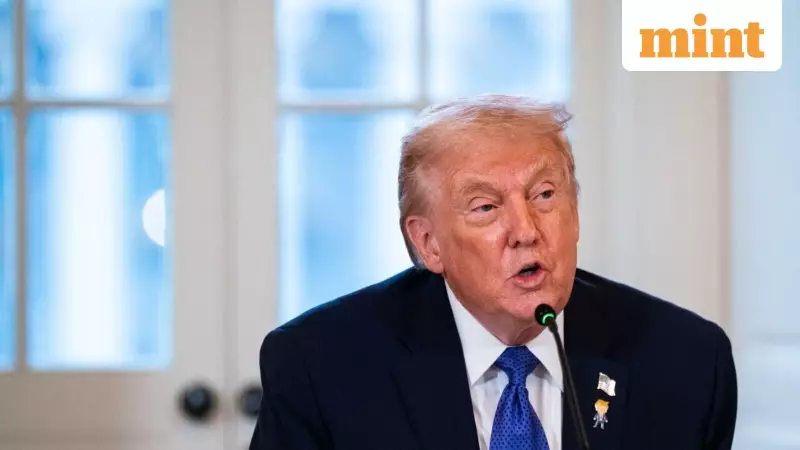
Trump Announces Sweeping 25% Tariff on Countries Trading with Iran
President Donald Trump made a bold declaration on Monday. He said the United States will impose a substantial 25% tariff on any nation that conducts business with Iran. This decision comes as the White House considers its response to widespread protests that have shaken the Iranian government.
Immediate Tariff Threat Targets Iran's Economic Partners
Trump posted the announcement on his Truth Social platform. He stated the order is effective immediately. "Any Country doing business with the Islamic Republic of Iran will pay a Tariff of 25% on any and all business being done with the United States of America," Trump wrote. He called the directive "final and conclusive."
The White House provided no additional details beyond the social media post. Officials did not immediately clarify which legal authority supports these tariffs. No executive actions on the matter appeared on the White House website right away.

Trump and his advisors have been discussing how to respond to the popular protests against Iran's leadership. The president planned to meet with senior officials on Tuesday to address the situation further.
Major Trading Partners Face Significant Impact
This tariff move directly affects several key nations. China stands as Iran's top trading partner according to data from the Observatory of Economic Complexity. Other significant partners include Turkey, India, Pakistan, and Armenia.
Russia also maintains strong economic ties with Iran. The two countries signed a free-trade agreement in 2025. This pact increased business between them significantly, as reported by Russia's state news agency TASS.
It remains unclear whether the new 25% tariff would add to existing duties already paid by these nations. The announcement creates immediate uncertainty for their trade relationships with the United States.
Potential to Disrupt Fragile International Agreements
Increasing tariffs on China could jeopardize a delicate trade truce. Trump and Chinese leader Xi Jinping established this agreement after meeting in South Korea last October. The new tariff threat now endangers a planned spring meeting between the two leaders.
The move also risks damaging recent agreements with other nations. Trump struck a trade and oil development pact with Pakistan last year. Higher tariffs could undermine this arrangement.
Ongoing trade talks with India face potential disruption as well. India already pays 50% tariffs partly due to its purchases of sanctioned Russian oil. Additional tariffs could complicate negotiations further.
Legal Challenges and Supreme Court Scrutiny
This tariff announcement arrives as the Supreme Court examines Trump's use of executive authority. The court is considering whether Trump overstepped legal boundaries by issuing tariffs under the International Emergency Economic Powers Act.
This 1977 law had never been used to levy tariffs before Trump's administration. While the White House didn't specify which legal authority supports the Iran tariffs, past similar threats relied on this same emergency powers act.
The Supreme Court could deliver its ruling on this case as soon as Wednesday. The court is expected to issue opinions then, potentially clarifying the limits of presidential trade authority.
The tariff decision represents a significant escalation in economic pressure against Iran. It demonstrates the Trump administration's willingness to use trade policy as a tool of foreign policy. The move will likely have ripple effects across global markets and diplomatic relationships.