

Middle East Conflict Delivers Severe Blow to Bundi's Basmati Rice Industry
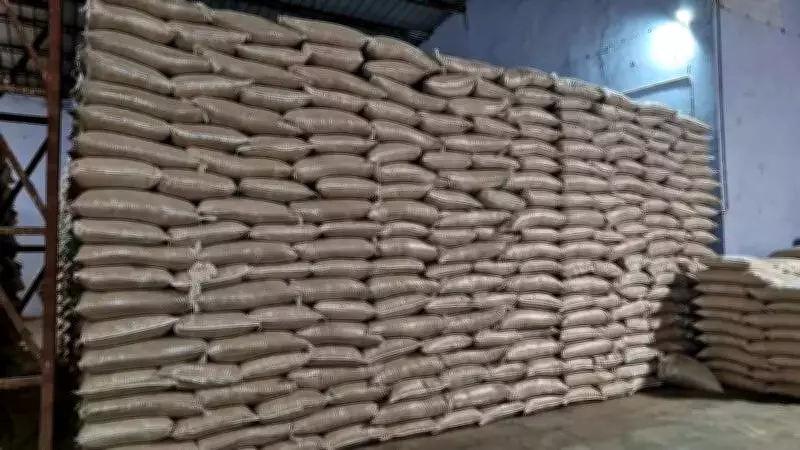
The escalating conflict in the Middle East has dealt a devastating blow to the renowned Basmati rice industry centered in Bundi and Kota, Rajasthan. Industry representatives revealed on Sunday that approximately 3,75,000 quintals of premium Basmati rice, valued at over Rs 300 crore, are currently stranded at seaports and in storage facilities, unable to reach international markets.
Impending Unemployment Crisis for Thousands of Workers
A dire threat of unemployment now looms over nearly 10,000 workers employed across approximately 35 rice factories in the Bundi-Kota region. Disturbingly, about 60% of this workforce hails from Bihar. Factory owners are contemplating a complete halt in production due to critically exhausted storage capacity, with no clear timeline for export resumption.
"We are staring at a complete standstill," said Neeraj Goyal, President of the Bundi Rice Mill Association. "Exporters are trapped in a double bind—unable to ship their existing stock and also failing to receive pending payments from international buyers. Only a handful of major clients have released minimal partial payments."

Key Export Markets Paralyzed by Geopolitical Tensions
Bundi's aromatic Basmati rice is a major export commodity, primarily destined for markets in Iran, Iraq, the UAE, Sudan, Turkey, Jordan, Algeria, Kuwait, and select European nations. The current hostilities have effectively frozen this vital trade corridor.
Ramandeep Sharma, President of Bundi district's Laghu Udhyog Bharti, provided stark figures: "The combined processing capacity of Bundi and Kota is at least 25,000 quintals of rice per day. A staggering 80% of this output was traditionally exported to the UAE, Iran, and Iraq." He noted that the market rate at the war's onset was Rs 80 per kg, but the export halt has rendered this moot for the stranded 3.75 lakh quintals.
Logistical and Financial Nightmare for Exporters
The crisis has spawned severe logistical and financial challenges. Shipping companies responsible for transporting rice to conflict zones like Iran and Iraq are being denied insurance coverage due to the high-risk war conditions. Consequently, transportation costs have skyrocketed, with reports indicating an increase of more than 10 times the standard rates.
Sharma urgently appealed to the state government for intervention: "The government must provide special concessions for rice millers and the labourers in this region. We need a dedicated relief package or a special portfolio for industries devastated by war, similar to the support extended during the Covid-19 pandemic."
An Industry Already Battered Seeks a Lifeline
The Bundi rice industry is a significant economic pillar, boasting an annual turnover of around Rs 4,000 crore. Another prominent rice miller, Bhanu Nyati, highlighted the scale, noting that Bundi, Kota, and Baran collectively produce about 15 lakh tonnes of Basmati rice annually.
This is not the first geopolitical shock for local farmers and millers. Balwant Singh, a cultivator from Barkheda village in Bundi district, lamented, "We already suffered losses of Rs 1,000-1,500 per quintal due to the Russia-Ukraine war. This ongoing Middle East conflict has pushed our business from bad to worse." Singh, who cultivated 1,985 DSR over 20 bighas of farmland, embodies the widespread distress.
On the ground, some mills have begun scaling down. Badri Lal, a rice mill labour contractor, reported, "A few rice mills in the city have reduced production and shifted focus to maintenance work. However, no labourer has been formally laid off yet." The situation remains precarious, with the industry holding its breath for a diplomatic resolution that would allow its prized Basmati to flow once again to global tables.






