Keir Starmer, the UK Prime Minister who successfully concluded the long-awaited Free Trade Agreement (FTA) with India, has been ousted from office after a series of policy missteps and U-turns that eroded public confidence. Despite an initial phase of economic stabilization, his tenure ended prematurely, marking a dramatic fall from grace for the Labour leader.
FTA Milestone and Early Success
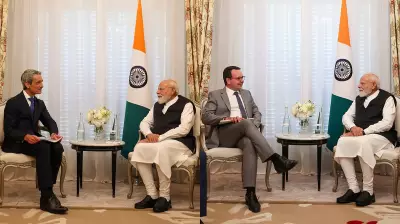
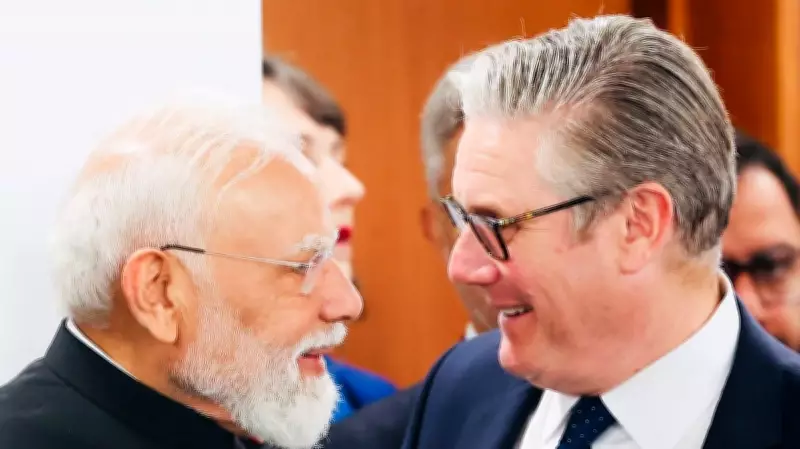
Starmer’s government achieved a major diplomatic and economic victory by finalizing the India-UK FTA, a deal that had been under negotiation for years. The agreement, hailed as a landmark, was expected to boost bilateral trade by billions of pounds and strengthen ties between the two nations. According to government sources, the FTA was projected to increase UK exports to India by 40% over five years, creating thousands of jobs across sectors like technology, pharmaceuticals, and services.
In the early months of his premiership, Starmer’s focus on fiscal discipline and infrastructure investment helped stabilize the British economy, which had been battered by post-Brexit inflation and energy crises. His approval ratings climbed as he rolled out a “New Deal for Britain” that included green energy subsidies and public spending reforms.

Policy U-Turns and Misjudgments
However, Starmer’s political fortunes reversed sharply after a series of controversial decisions. In early 2025, his government backtracked on a planned carbon tax, citing industry backlash, only to reinstate a watered-down version months later. This U-turn angered both environmentalists and business leaders. “The prime minister’s flip-flopping on climate policy has damaged the UK’s credibility on the world stage,” said a senior Conservative MP in a parliamentary debate.
Further damage came from his handling of immigration. Starmer’s proposal to expand the Rwanda asylum scheme—a policy he had previously criticized—led to a revolt within his own party. The policy was eventually scrapped, but not before causing a cabinet reshuffle that exposed deep divisions in the Labour government.
Economic Stability Falters
While the India FTA remained a bright spot, domestic economic indicators worsened. Inflation, which had fallen to 2.1% in late 2024, crept back to 4.5% by mid-2025, driven by rising food and energy costs. A planned increase in corporation tax was abandoned after lobbying from major firms, leading to a budget deficit that forced cuts to public services. The Office for Budget Responsibility (OBR) revised growth forecasts downward, with GDP growth slipping to 0.8% in 2025.
Starmer’s approval rating plummeted from a high of 52% in early 2025 to just 29% by June 2026, according to YouGov polls. A leaked internal Labour memo cited “a loss of trust in the prime minister’s ability to deliver consistent policy” as a key factor in the party’s declining support.
Downfall and Legacy
Starmer’s downfall was sealed by a no-confidence motion triggered by his own backbenchers after the botched rollout of a new digital health ID system. The system, intended to streamline NHS records, faced massive technical failures and privacy concerns, leading to a public inquiry. Starmer resigned hours before the vote, stating, “I have always put the country first, but I accept that my leadership has become a distraction from the work of government.”
Political analysts note that Starmer’s legacy will be defined by the India FTA, a deal that eluded his predecessors. “He delivered what no other UK PM could,” said Professor Jane Holloway of the London School of Economics. “But his inability to maintain policy coherence ultimately cost him the premiership.”
As the UK prepares for a snap election, the FTA with India stands as a testament to Starmer’s diplomatic acumen, even as his domestic governance faltered. The agreement is set to come into full force in 2027, with both nations already reporting a 15% increase in trade volume since its signing.