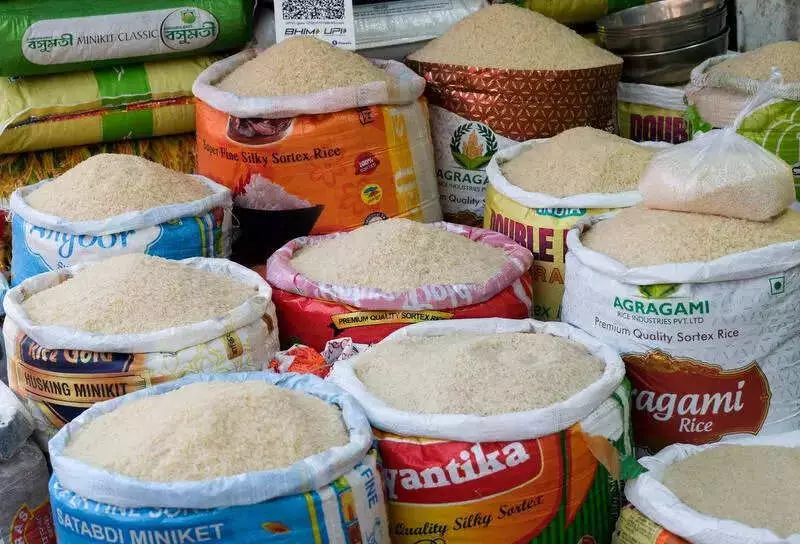
Political unrest and economic uncertainty in Iran are causing unease among Indian rice exporters, particularly those based in Punjab and Haryana. However, opinions within the trade community remain sharply divided on how severely this situation impacts their business.
Mixed Reactions from Exporters
Some exporters report that shipments and payments to Iran have stalled completely. They point to severe disruptions in normal trade flows. Others argue that exporters with established safe payment mechanisms are not significantly affected.
Tejinder Singh, CEO of Amar Singh Chawal Wala, which owns the Lal Qilla basmati brand, shared his perspective. He stated that the current political crisis does not heavily impact exporters who have secure payment arrangements in place.

"The trade with Iran has faced instability in the past as well, and exporters are cautious. Payments are structured through safer channels," said Tejinder Singh.
He also noted that rice exports to Iran had already slowed in recent months. This slowdown occurred due to the Iranian government's acute shortage of US dollars, which weakened import demand even before the latest unrest began.
Concerns Over Ground Situation
In contrast, Sanjiv Chadha of Sifti Rice Mills expressed serious concern. He highlighted that banking operations in Iran are severely affected.
"The banking system is off, internet services are disrupted, and unloading at ports has virtually come to a halt. Under these conditions, exporters have no option but to wait and watch," Chadha explained.
Chadha estimated that rice exports worth Rs 1,200-1,400 crore from Punjab and Haryana exporters are currently outstanding with Iran. He added that market uncertainty has led to a price drop of Rs 300-400 per quintal for rice.
Complications in Shipment Routes
Exporters also face complications with shipment routes. Some consignments follow a "bill to Dubai, ship to Bandar Abbas" model, while others prefer direct shipments to Iranian ports to ensure hassle-free payments.
The current unrest, however, has affected both routes, leading to significant delays and increased uncertainty. Industry sources reveal that payments are being routed through alternative channels, including barter arrangements, but they acknowledge that risks have increased substantially.
Exporters are now exercising caution with fresh contracts, especially for inventories specifically earmarked for the Iranian market. They are reassessing risks and strengthening payment safeguards to avoid overexposure.
Industry Federation's Stance
Notably, the Indian Rice Exporters Federation has not issued any advisory to halt exports to Iran. Instead, the federation advises exporters to reassess contract risks carefully. They recommend strengthening payment safeguards and avoiding overexposure to the volatile market.
The overall sentiment remains one of watchful waiting as exporters navigate these challenging times. The divided opinions reflect the complex nature of international trade amid geopolitical instability.