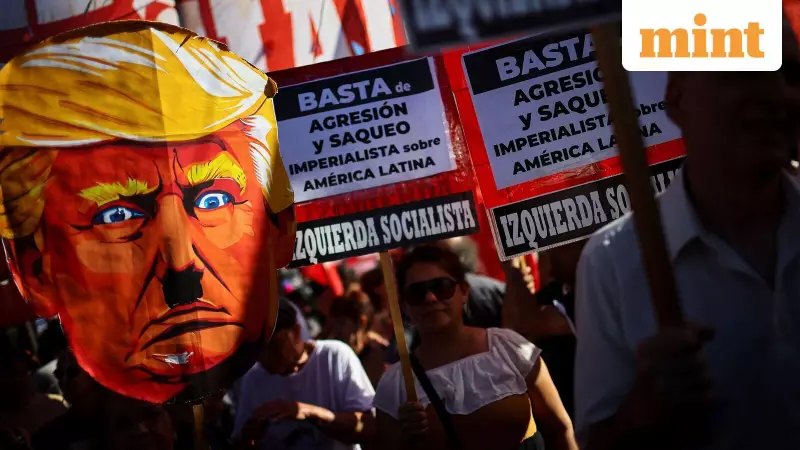
The dramatic US military intervention in Venezuela has created a complex mix of hope and anxiety for policymakers in New Delhi. On one hand, a potential easing of American sanctions could finally unlock India's long-stalled energy investments and nearly $600 million in unpaid dividends. On the other, the immediate reality on the ground is far messier and fraught with uncertainty.
India's High-Stakes Bet on Venezuelan Crude
India's state-run oil companies had invested approximately $2.5 billion into Venezuela's oil sector before US sanctions tightened significantly in 2020. At its peak, India was one of the largest buyers of Venezuelan heavy crude, importing over 400,000 barrels per day. The sanctions regime not only crippled production at oil fields where Indian firms hold stakes but also froze dividend payments and blocked alternative arrangements like oil-for-payment deals.
With President Nicolás Maduro captured in a sudden US strike, global oil markets are bracing for volatility. Energy analysts warn that years of strict economic curbs have left Venezuela's oil infrastructure in a severely battered state. Hyperinflation and deep political uncertainty could further delay any meaningful recovery of the oil sector. Even if Washington decides to ease sanctions, it may take considerable time before Venezuelan crude flows reliably to international markets again.

Limited Immediate Impact, But High Long-Term Stakes
For India, which imports nearly 88% of its crude oil and spends about a quarter of its total import bill on oil, the stakes are exceptionally high. A mere $1 increase in global crude prices can inflate India's annual import bill by a staggering ₹13,000 crore. Despite this vulnerability, experts believe the immediate impact on India will be limited. Venezuela's current oil production remains very low, and India's trade with the South American nation has reduced sharply since the sanctions were imposed.
In the longer run, however, a stable political transition in Caracas could quietly strengthen India's energy security—but only if the current chaos settles before the strategic opportunity slips away. The situation presents a delicate balancing act for Indian diplomacy and energy planners.
A Broader Context of Market Realities
Interestingly, the capture of Venezuela's oil heartland did not trigger a major tumble in global crude prices. Markets barely budged because Venezuela's oil reality does not match the dramatic headlines. Despite holding the world's largest proven oil reserves, its output has slumped to under 1 million barrels per day due to chronic underinvestment and crumbling infrastructure. This means a regime change will not instantly unleash a flood of new barrels into the global market.
When trading resumed after news of President Maduro's capture, Brent crude prices stayed around $60 per barrel, showing only a whisper of a spike before settling back down. Traders understand that Venezuelan crude will not impact global supply in the near term. For India, this translates to no immediate price relief or supply disruption, but it opens a potential longer-term strategic opportunity if Venezuelan crude eventually flows freely again to global buyers, including Indian refiners.