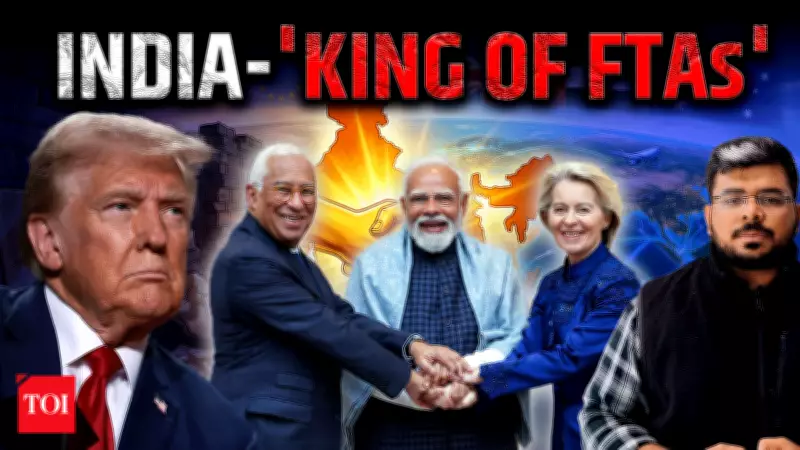
From Tariff Maharaja to Deal King: India's Strategic Trade Transformation
For many decades, India was widely recognized as the "Maharaja of Tariffs" due to its high import duties and cautious approach to international trade. The country maintained a protectionist stance, shielding domestic industries from foreign competition through substantial tariff barriers. This historical policy framework was deeply rooted in the desire to foster self-reliance and protect local markets from external economic pressures.
The Dramatic Shift in Trade Strategy
In a remarkable turnaround, India has now emerged as the "king of deals", actively pursuing and signing free-trade agreements (FTAs) at an unprecedented pace. Over recent years, the nation has engaged in negotiations and finalized pacts with key regions including Europe, the Gulf countries, Australia, and the United States. This strategic pivot marks a significant departure from the traditional protectionist model that dominated India's economic policy for generations.
Catalysts Behind the Transformation
So what exactly prompted this fundamental change in India's trade philosophy? The shift gained substantial momentum after 2019, driven by several critical factors:

- Geopolitical Realignment: Changing global dynamics and the need to diversify trade partnerships
- Economic Imperatives: The pursuit of enhanced market access for Indian goods and services
- Strategic Vision: A conscious move to position India as a major player in global supply chains
- Competitive Pressure: The recognition that isolationist policies could hinder economic growth
The New Trade Architecture
India's contemporary trade strategy represents a sophisticated balancing act between protecting domestic interests and embracing global opportunities. The government has developed a nuanced approach that carefully evaluates each potential agreement for mutual benefit while safeguarding sensitive sectors. This methodical yet ambitious strategy has enabled India to negotiate from a position of strength rather than defensive caution.
Economic Implications and Future Prospects
The critical question remains: Can these free-trade agreements genuinely reshape India's economic future, or do they introduce new risks? The potential benefits are substantial:
- Enhanced Export Opportunities: Access to larger markets for Indian products
- Technology Transfer: Acquisition of advanced technologies through partnerships
- Investment Inflows: Attracting foreign direct investment in key sectors
- Competitive Advantage: Strengthening domestic industries through global exposure
However, challenges persist, including the need to ensure that domestic industries can withstand increased competition and that the benefits of trade liberalization reach all segments of society. The success of this new trade paradigm will depend on effective implementation, continuous monitoring, and adaptive policy responses to emerging global trends.
India's journey from tariff protectionism to proactive deal-making represents one of the most significant economic policy transformations in recent history. As the nation continues to negotiate and implement these agreements, the world watches to see whether this strategic gamble will propel India toward its ambition of becoming a global economic powerhouse or create vulnerabilities that require careful management in the years ahead.