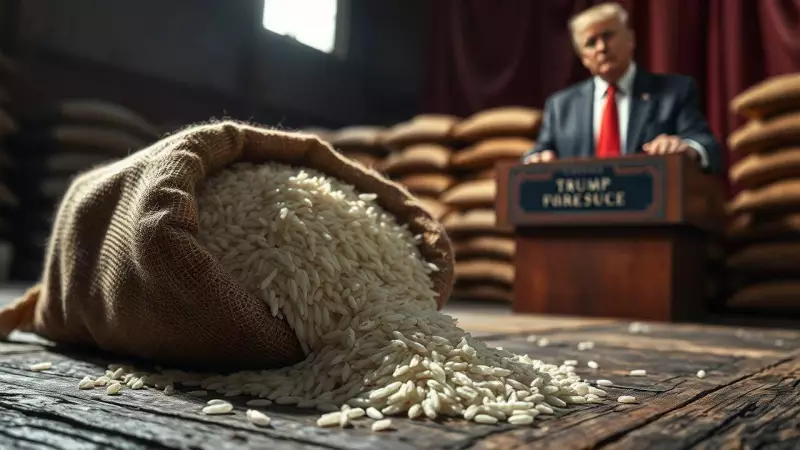
India's Rice Exports Face Dual Challenges from Iran Unrest and US Tariff Threats
India's crucial rice export sector is confronting significant headwinds from two different directions. The combination of escalating tensions in Iran and new tariff threats from the United States is creating uncertainty for Indian rice exporters.
Iran's Internal Turmoil Disrupts Trade Flows
Recent export data reveals the importance of Iran to India's basmati rice industry. During April to November of 2025-26, India shipped 5.99 lakh metric tonnes of basmati rice to Iran, valued at $468.10 million. Despite this substantial trade volume, the current instability in Iran is causing serious problems for Indian exporters.
The Indian Rice Exporters Federation reports that order execution has become increasingly strained. Remittances are experiencing delays, and delivery schedules have become unsettled during the current fiscal year.

Dr. Prem Garg, National President of IREF, explained the situation clearly. "Iran has historically been a pillar market for Indian Basmati," he stated. "However, the current internal turmoil has disrupted trade channels, slowed payments, and dented buyer confidence."
Domestic Market Impact
The consequences are already visible in Indian markets. Prices of major basmati varieties have fallen sharply over the past week. This decline is driven by cautious buying behavior, postponed deals, and growing risk aversion among exporters.
"The immediate fallout is evident in Indian mandis, where Basmati prices have softened sharply within days," Dr. Garg observed. He emphasized that exporters must exercise heightened caution, particularly regarding credit exposure and shipment timelines.
US Tariff Announcement Adds Pressure
Meanwhile, another challenge has emerged from the United States. President Donald Trump recently announced new tariff measures targeting countries that trade with Iran.
"Effective immediately, any Country doing business with the Islamic Republic of Iran will pay a Tariff of 25% on any and all business being done with the United States of America," Trump posted on the Truth Social platform. He described the order as "final and conclusive."
This announcement comes at a difficult time for Indian rice exporters. IREF points out that Indian rice shipments to the US already face a 50% duty, which represents a steep jump from the earlier tariff rate of 10%.
Industry Response and Recommendations
The Indian Rice Exporters Federation has advised its members to take several precautionary measures. Exporters should re-evaluate risks tied to Iranian contracts and strengthen payment safeguards. The federation also recommends refraining from excessive inventory build-up aimed solely at the Iran market.
"We are not sounding an alarm, but urging prudence," Dr. Garg clarified. "In periods of geopolitical and internal instability, trade is often the first casualty. A calibrated approach is essential to protect both exporters and farmers."
IREF has urged industry participants to expand their presence in alternative destinations. West Asia, Africa, and Europe represent potential markets that could help mitigate the impact of any extended slowdown in shipments to Iran.
Market Resilience and Future Outlook
Despite these challenges, there are some positive indicators. Indian rice exports to the United States have shown resilience despite substantial tariff increases. IREF attributes this to several factors.
Indian rice, particularly basmati, is not a like-for-like substitute for rice from Pakistan or the United States. Additionally, Indian rice is deeply embedded in the culinary traditions of the Gulf region and the Indian subcontinent diaspora. This ensures sustained consumer demand despite price pressures.
The United States remains the 10th largest market for Indian rice globally and the fourth largest destination for Indian Basmati. This underscores its strategic importance to the Indian rice industry.
Payment Problems and Market Uncertainty
In contrast to the US market, IREF identifies more serious risks emerging from Iran. Disruptions at the local market level have started to interfere with trade payments.

Exporters have received information from importers indicating difficulties in meeting contractual obligations. Transferring funds to India has become problematic, injecting a high degree of uncertainty into ongoing transactions.
Although similar episodes have occurred earlier, the direction and duration of the current disruption remain uncertain. This situation is likely to trigger additional volatility in prices, cash flows, and overall market confidence in the near term.
Strategic Implications for India's Rice Sector
The current situation highlights how global trade is becoming increasingly intertwined with geopolitics. The developments in Iran serve as a reminder that food exports, particularly strategic commodities like rice, are highly sensitive to regional stability.
"For India's rice ecosystem, timely caution today may help prevent deeper distress tomorrow," IREF concludes. The federation emphasizes that India's rice sector is resilient but must be safeguarded through timely intelligence and responsible trade practices.
As the situation continues to evolve, Indian rice exporters face the challenge of navigating complex international dynamics while maintaining their position in crucial global markets.