

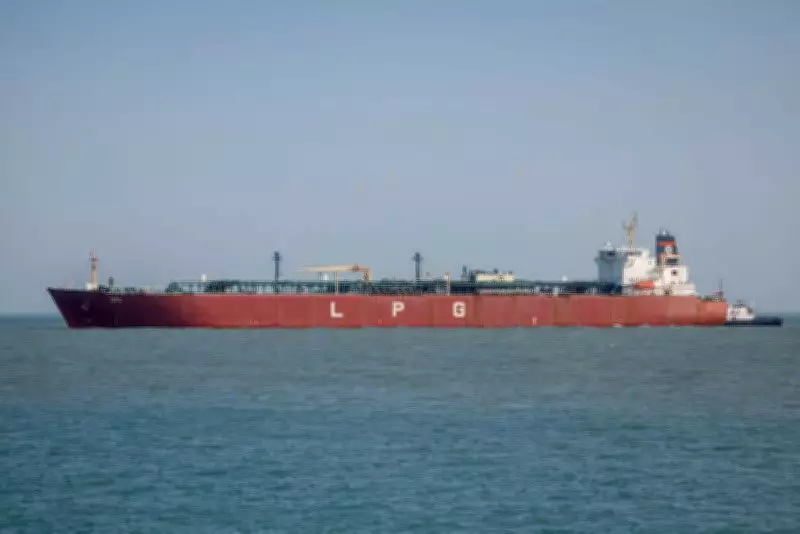
India's Energy Crisis Deepens as 1.7 Million Tonnes of Oil, LNG, LPG Stuck in Strait of Hormuz
India is grappling with a significant energy crisis as over 1.7 million tonnes of crucial fuel supplies, including crude oil, liquefied natural gas (LNG), and liquefied petroleum gas (LPG), remain stranded on Indian-flagged vessels in the Strait of Hormuz. This critical situation has emerged following the effective shutdown of the narrow waterway due to escalating tensions between the US, Israel, and Iran.
Details of the Stranded Fleet and Cargo
According to Rajesh Kumar Sinha, Special Secretary in the Shipping Ministry, a total of 22 Indian-flagged ships are currently stuck on the west side of the Strait of Hormuz, with an additional three vessels on the east side. The stranded cargo comprises:
- 1.67 million tonnes of crude oil
- 3.2 lakh tonnes of LPG
- Approximately 2 lakh tonnes of LNG
Originally, 28 Indian vessels were in the area when the conflict erupted, but six have managed to sail to safety in the past week. All 611 seafarers aboard the 22 vessels on the west side are reported safe.

Breakdown of Vessel Types and Current Status
The composition of the stranded fleet highlights the diversity of India's maritime trade affected by this disruption:
- Six LPG carriers
- One LNG tanker
- Four crude oil tankers
- One chemical product transporter
- Three container ships
- Two bulk carriers
- One dredger, one empty vessel, and three in dry dock for maintenance
Sinha emphasized that efforts are underway to secure passage for these vessels through the war-hit strait, but progress remains slow due to the volatile geopolitical environment.
Geopolitical Context and Broader Impact
The Strait of Hormuz, a vital chokepoint connecting the Persian Gulf to the open ocean, has been effectively sealed following US and Israeli attacks on Iran and Tehran's subsequent retaliation. This closure has confined close to 500 tanker vessels in the Persian Gulf, including:
- 108 crude oil tankers
- 166 oil product tankers
- 104 chemical/product tankers
- 52 chemical tankers
- 53 other tanker types
Analysts note that Iran may be allowing select vessels to transit after a verification process to confirm ownership, cargo, and that they are not affiliated with the US. In recent days, at least four vessels—including three bulk carriers (two Greek, one Indian) and one Pakistani Aframax tanker—have transited outbound via the Larak-Qeshm Channel.
Implications for India's Energy Security
This disruption poses a severe threat to India's energy security, as the country heavily relies on imports through the Strait of Hormuz:
- 88% of crude oil imports
- 50% of natural gas imports
- 60% of LPG imports
Before the conflict, more than half of India's crude oil came from countries like Saudi Arabia, Iraq, and the UAE, all of which depend on the strait for shipping. Additionally, 85-95% of LPG and 30% of gas supplies transited through this route.
While India has partially offset crude oil disruptions by sourcing from alternative regions such as Russia, West Africa, the US, and Latin America, the curtailment of gas and LPG supplies has directly impacted industrial and commercial users, exacerbating the energy crisis.
The ongoing situation underscores the fragility of global energy supply chains in the face of geopolitical tensions, with India's economy and energy sector facing significant challenges until a resolution is achieved.






