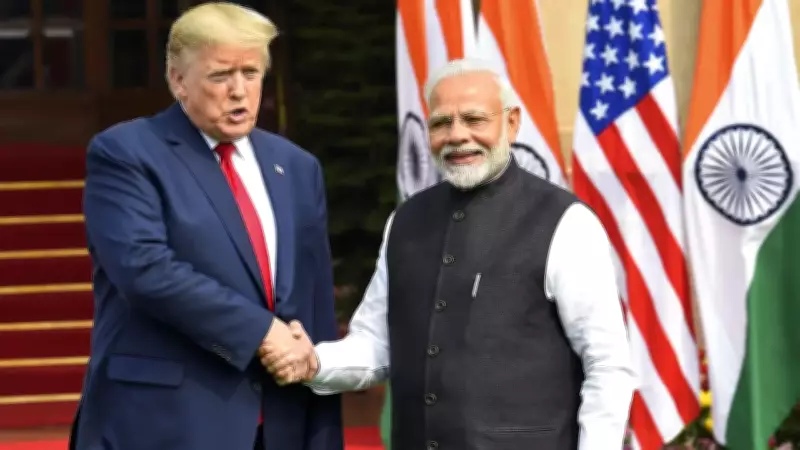
India-US Trade Deal: A Strategic Breakthrough After Months of Tensions
Until recently, a trade agreement between India and the United States seemed a distant prospect. The relationship was strained by India's refusal to endorse former US President Donald Trump's claims regarding Operation Sindoor and ongoing disputes over tariffs. US Commerce Secretary Howard Lutnick aptly captured the mood, stating in a podcast that "the train had left the station" for an early deal.
A Dramatic Shift in Bilateral Relations
Against this backdrop, the newly announced framework for an interim trade agreement represents a significant and unexpected breakthrough. This pact serves as a precursor to a comprehensive Bilateral Trade Agreement and is poised to have positive ripple effects across the entire spectrum of India-US ties.
This development places India on a much stronger footing not only compared to economic competitors such as Indonesia, Bangladesh, and Vietnam but also in contrast to Pakistan, which has rapidly positioned itself as a US ally. The tariff reductions are particularly beneficial for India's Micro, Small, and Medium Enterprises (MSMEs) and labor-intensive sectors like apparel, leather, and marine products.

Navigating Political Pressures and Negotiations
Indian negotiators skillfully managed the complex discussions, avoiding distractions from aggressive remarks by figures like Peter Navarro, a senior US trade counselor and Trump confidant. They successfully resisted US pressure to open Indian markets to corn, soybean, and genetically modified crops. Notably, the US states producing these commodities are home to Trump's core MAGA supporters.
With the US mid-term elections approaching and the president's voter base showing signs of instability, the pressure to appease this constituency was intense. The success of Indian diplomats in this context helps the government counter opposition accusations of a "surrender." Despite criticism, Commerce and Industry Minister Piyush Goyal defended the agreement, highlighting domestic demand for imports like dried distillers' grains and red sorghum for animal feed.
Economic and Diplomatic Implications
The agreement includes provisions for both nations to discuss further market access, ensuring a balanced approach. India is well-positioned to meet its commitments, especially given the shared goal of increasing bilateral trade to $500 billion by 2031. India's growing economy demands high-quality US products, ranging from aviation to semiconductor manufacturing equipment.
By dispelling the uncertainty that had clouded bilateral relations—and which had given adversaries like Pakistan cause for celebration—this deal enhances India's diplomatic confidence. At a recent press conference, Minister Goyal hinted at the strategic dimensions, smiling when asked if the agreement's focus on addressing "non-market policies of third parties" targeted China, remarking, "The intelligent will understand."
This trade framework not only boosts economic ties but also fortifies India's global stance, turning a period of friction into a moment of strategic triumph.