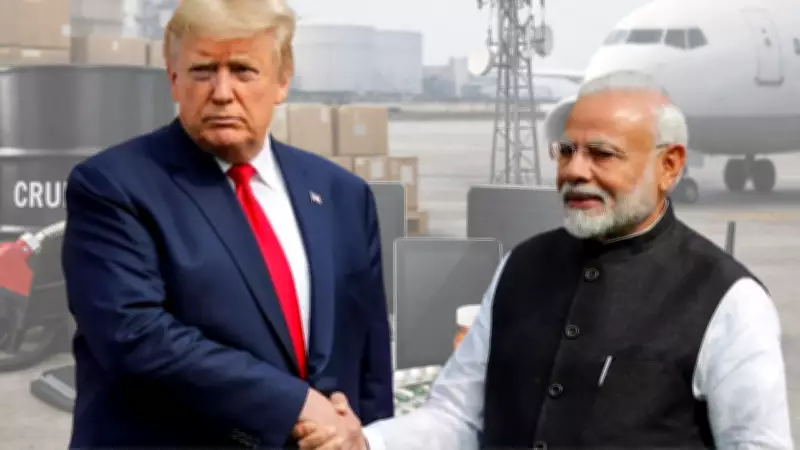
In a significant development for global trade relations, India and the United States have reached a comprehensive trade agreement, as announced by US President Donald Trump on Monday. The deal represents a major breakthrough following months of tariff tensions and signals a new era of economic cooperation between the two nations.
Massive Purchase Commitment and Strategic Sectors
President Trump revealed that New Delhi has committed to "buying more than $500 billion worth" of American products, a staggering figure that underscores the scale of this bilateral agreement. According to an Indian government official speaking to Reuters, this purchasing commitment spans multiple strategic sectors crucial to both economies.
The official detailed that India's planned purchases will cover:

- Petroleum products
- Defence equipment and technology
- Electronics and telecommunications products
- Pharmaceuticals and medical equipment
- Aircraft and aviation components
Agricultural Access and Trade Deficit Reduction
A particularly significant aspect of the agreement involves agricultural trade. US Secretary of Agriculture Brooke Rollins emphasized the importance of this component in a social media post, stating: "New US-India deal will export more American farm products to India's massive market, lifting prices, and pumping cash into rural America."
Rollins provided crucial context about the existing trade imbalance, noting: "In 2024, America's agricultural trade deficit with India was $1.3 billion. India's growing population is an important market for American agricultural products and today's deal will go a long way to reducing this deficit."
The agreement specifically includes provisions for greater access of American agricultural products to the Indian market, addressing long-standing concerns about trade barriers in this sector.
Substantial Tariff Reductions Announced
In a move that will significantly impact bilateral trade flows, President Trump announced substantial tariff reductions. He stated that tariffs on Indian goods would be lowered to 18%, representing a dramatic decrease from the previous 50% rate that included both reciprocal tariffs and punitive measures related to India's purchase of Russian crude oil.
Equally important, India has agreed to reduce import taxes on US goods to zero, creating unprecedented market access for American products across multiple categories. These tariff adjustments are expected to stimulate trade in both directions and create new opportunities for businesses in both countries.
Geopolitical Implications and Energy Considerations
President Trump framed the trade agreement within a broader geopolitical context, linking it directly to energy security and international relations. He revealed that Prime Minister Narendra Modi has agreed to stop purchasing Russian oil as part of the broader understanding between the two nations.
"This will help END THE WAR in Ukraine, which is taking place right now, with thousands of people dying each and every week!" Trump declared in a social media post, highlighting how economic agreements can influence global security dynamics.
Leadership Reactions and Future Cooperation
Prime Minister Narendra Modi welcomed the agreement with enthusiasm, expressing his delight at the tariff reductions and praising President Trump's leadership. "Trump's leadership is vital for global peace, stability, and prosperity," Modi stated, adding, "I look forward to working closely with him to take our partnership to unprecedented heights."
The mutual appreciation expressed by both leaders suggests this agreement represents more than just an economic arrangement—it signifies strengthening diplomatic ties and shared strategic interests between the world's largest democracy and its most powerful economy.
Ongoing Negotiations and Comprehensive Vision
While the current agreement covers substantial ground, officials indicate that negotiations toward a more comprehensive trade pact will continue. The source speaking to Reuters confirmed that discussions will expand to include additional sectors not covered in this initial agreement, suggesting this represents the foundation for even broader economic cooperation.

The trade deal spans multiple strategic sectors that reflect both countries' economic priorities and technological ambitions. From defence cooperation to pharmaceutical access, from agricultural trade to energy security, the agreement touches upon virtually every major aspect of the bilateral relationship.
This landmark agreement comes after months of careful negotiation and represents a significant shift from the tariff tensions that had characterized recent India-US trade relations. The commitment to purchase over $500 billion worth of American products, combined with substantial tariff reductions and increased market access, creates a new framework for economic engagement that could reshape trade patterns between the two nations for years to come.