Historic India-US Trade Agreement Finalized with Significant Tariff Reduction
In a major diplomatic and economic breakthrough, India and the United States have successfully negotiated a comprehensive trade deal that promises to reshape bilateral commerce. Under the terms of this landmark agreement, Washington has committed to substantially lowering the reciprocal tariff imposed on Indian goods. The tariff rate will be dramatically reduced to 18 per cent, down from a cumulative total of 50 per cent. This significant concession is expected to boost Indian exports, enhance market access, and strengthen economic ties between the two democratic giants.
Political Reactions: Praise from BJP, Criticism from Opposition
The announcement of the trade deal has ignited a flurry of political reactions across the spectrum. Bharatiya Janata Party (BJP) members and supporters have enthusiastically welcomed the agreement, viewing it as a testament to Prime Minister Narendra Modi's diplomatic acumen and commitment to national economic interests.
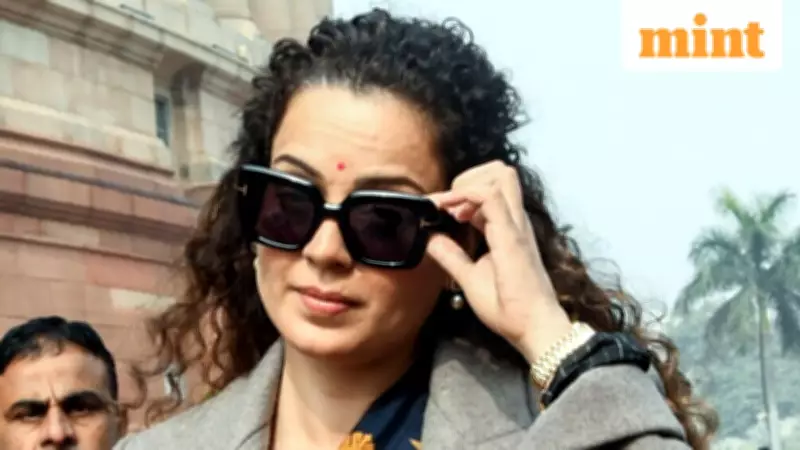
BJP MP and acclaimed actress Kangana Ranaut was among the first to publicly commend the Prime Minister. In an exclusive statement to news agency ANI, Ranaut expressed the nation's collective excitement, stating, "The entire country is very excited about the India-US Deal. The more the conduct of PM is praised, the less it is. He did not put anyone down or turn anyone down. But he has cracked such a major deal for India."

Ranaut further highlighted the timing of the agreement, noting that it arrives within a week of India signing another pivotal trade deal with the European Union. "Despite such pressure from the entire world, a historic deal was signed with EU. Besides this, US also came onboard," she added, underscoring the government's proactive trade diplomacy.
Congress and Rahul Gandhi's Sharp Critique
In stark contrast, the opposition, led by the Congress party, has launched a scathing attack on the Modi government over the trade deal. Senior Congress leader and Member of Parliament Rahul Gandhi leveled serious allegations against the Prime Minister, accusing him of being "compromised" and "selling the country" through this agreement.
Addressing the media, Gandhi asserted, "Modi ji is rattled. The (US-India) trade deal, which was stalled for the past few months, was signed by Narendra Modi last night. There is extreme pressure on him. Narendra Modi ji's image can get damaged. The main thing is that our PM is compromised. The public needs to think about this."
He further elaborated on his claims by referencing two specific points of pressure:
- The alleged legal case against Gautam Adani, Chairman of the Adani Group, in the United States, which Gandhi described as "actually a case on Modi ji."
- The unreleased contents of the Epstein files, which he suggested contain damaging information.
"There is a case on Adani ji in the US, it is actually a case on Modi ji. The Epstein Files contain even more that the US has not yet released. There is pressure due to that as well. These are the two pressure points. The country should understand this," Gandhi stated.
Congress Demands Transparency and Details
Beyond the personal allegations, the Congress party has formally demanded complete transparency regarding the trade deal's specifics. According to ANI reports, the party has raised critical questions about several key aspects of the agreement, including:
- Allegations that the agriculture sector has been opened up to foreign competition.
- Calls for the reduction of tariffs to "zero" and the potential implications for domestic industries.
- Concerns over a possible pause on the purchase of Russian oil, as hinted by former US President Donald Trump.
The party insists that the government must provide a full, detailed account of the negotiations and the final terms to ensure parliamentary oversight and public accountability.

Parliamentary Proceedings Disrupted, Lok Sabha Adjourned
The heated political debate over the trade deal spilled onto the floor of the Lok Sabha, leading to a fierce and protracted exchange between MPs of the ruling NDA and the opposition INDIA bloc. The arguments centered on the merits of the deal, the allegations of compromise, and the demands for greater disclosure.
Amid the escalating tensions and persistent disruptions, the Speaker was compelled to adjourn the House for the remainder of the day. This parliamentary stalemate underscores the deep political divisions surrounding the India-US trade agreement and sets the stage for further intense discussions in the coming sessions.
The India-US trade deal, therefore, stands not only as a significant economic milestone but also as a potent political flashpoint, highlighting the contrasting narratives of diplomatic triumph and alleged compromise that define the current political landscape.