India to Scale Back Russian Oil Purchases Under New US Trade Agreement
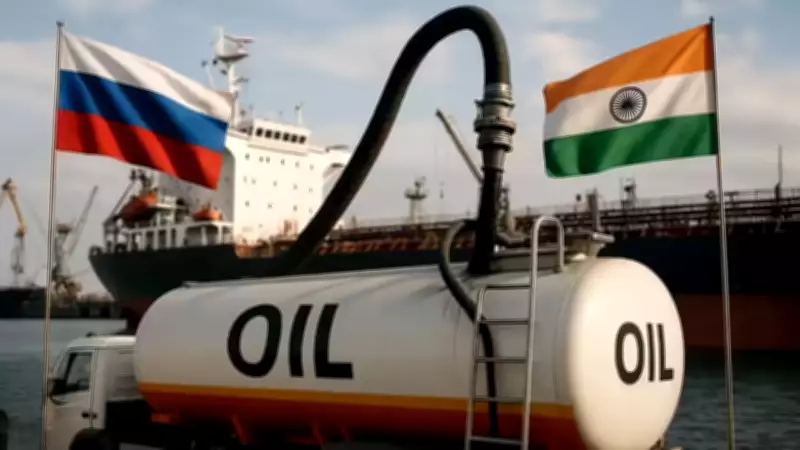
In a significant geopolitical and economic shift, India is reportedly set to reduce its imports of Russian oil following a bilateral trade deal with the United States. The agreement, which involves the removal of additional US tariffs on Indian goods, is contingent upon India's commitment to decrease its reliance on Russian crude. This development marks a strategic realignment in India's energy procurement policies amid evolving international dynamics.
US Tariff Removal in Exchange for Reduced Russian Oil Imports
US President Donald Trump has signed an executive order eliminating the additional 25 percent duty previously imposed on Indian imports. This tariff relief comes as part of a reciprocal arrangement where India has pledged to curtail its purchases of Russian oil. While official directives have not yet been issued to refiners, sources indicate that informal instructions have been communicated to gradually scale back acquisitions from Russia.
Official Stance on Energy Security and Diversification
During a recent Ministry of External Affairs briefing, spokesperson Rabdhir Jaiwal emphasized that India's energy decisions are guided by the paramount priority of securing energy for its 1.4 billion citizens. He stated, "The government has publicly affirmed on multiple occasions that ensuring energy security is our supreme objective. Our strategy involves diversifying energy sources in alignment with market conditions and international developments. All decisions are and will be made with this principle at the forefront." This statement underscores India's balancing act between geopolitical pressures and domestic energy needs.

Refiners' Responses and Existing Commitments
Most Indian oil refiners are expected to honor their current contractual obligations with Russia but will refrain from placing new orders. Several companies, including Hindustan Petroleum Corporation Limited (HPCL), Mangalore Refinery and Petrochemicals Limited (MRPL), and HMEL, had already ceased purchasing Russian oil last year in response to US sanctions. Indian Oil Corporation (IOC) and Bharat Petroleum Corporation Limited (BPCL) are now planning to wind down their remaining purchases.
Reliance Industries, India's largest buyer of Russian crude, is anticipated to halt imports after receiving its final shipment of 150,000 barrels. However, Nayara Energy presents an exception due to its ownership structure. With Rosneft holding a 49.13 percent stake, Nayara faces sanctions from the European Union and the United Kingdom, compelling it to continue sourcing Russian oil from non-sanctioned entities as it navigates limited alternatives.
Declining Import Volumes and Market Analysis
India's imports of Russian oil have been on a downward trajectory since US sanctions targeted Rosneft and Lukoil. Data reveals a sharp decline from 2.1 million barrels per day in May 2023 to 1.2 million barrels in December 2025, with a further drop to 1.1 million barrels in January. Industry experts predict that this figure will soon fall below the 1 million barrel per day threshold.
Sumit Ritolia, an analyst from Kpler, commented, "Russian volumes remain largely locked in for the next 8-10 weeks and continue to be economically critical for India's complex refining system." He forecasts that imports will stabilize between 1.1 and 1.3 million barrels daily through the early part of the second quarter.
Economic Implications and Alternative Sourcing Strategies
India, which imports approximately 90 percent of its oil requirements, had previously capitalized on discounted Russian crude following Western sanctions imposed after the Ukraine invasion. The new US deal may facilitate increased purchases of American oil and potentially open avenues for importing Venezuelan crude.
Prashant Vasisht of Icra noted that replacing Russian oil is unlikely to substantially impact India's import bill, estimating an increase of less than 2 percent. He suggested that Venezuelan crude, which is both cheaper and compatible with Indian refinery configurations, could serve as a viable alternative, helping to mitigate any financial repercussions from the shift in sourcing.

Broader Context and Future Outlook
This move reflects India's ongoing efforts to diversify its energy portfolio while navigating complex international relations. The reduction in Russian oil imports aligns with broader trends of decreasing dependency, driven by both economic considerations and diplomatic pressures. As India continues to prioritize energy security, its strategies will likely involve a mix of market-driven decisions and geopolitical accommodations, ensuring stability for its refining sector and overall economy.