The United States and India are set to hold a fresh round of crucial trade negotiations on Tuesday, marking a significant step in their economic partnership. This comes alongside a major strategic development: the US has formally invited India to join the 'Pax Silica' alliance, a coalition designed to counter China's dominance in semiconductors, critical minerals, and artificial intelligence infrastructure.
Trade Talks Advance Amid Tariff Challenges
In his first major address after taking charge in New Delhi, the new US Ambassador to India, Sergio Gor, confirmed the ongoing engagement. "Both sides continue to actively engage. In fact, the next call on trade will occur tomorrow," Gor stated on Monday. He acknowledged the complexity of finalizing a deal with the world's largest democracy but expressed determination to succeed.
This push follows a positive assessment from US Trade Representative Jamieson Greer, who told the US Senate on December 9 that India had presented the "best offer the US has ever received." Subsequent meetings between officials have aimed to advance the pact.

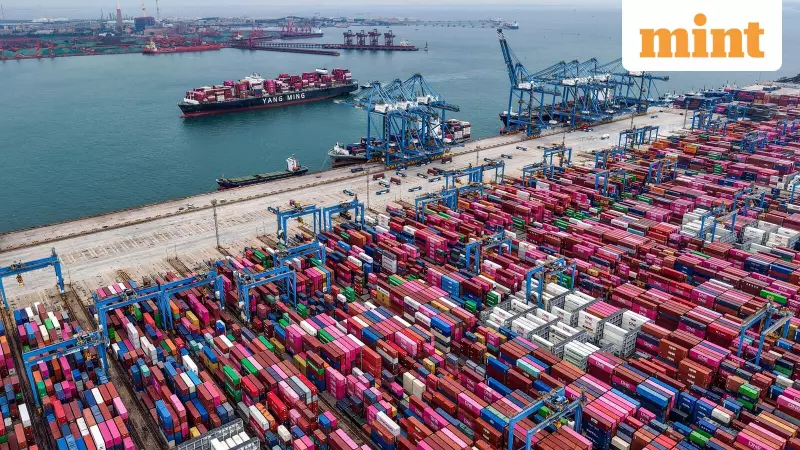
However, the trade relationship faces headwinds. India's exports to the US have been significantly impacted in the current fiscal year due to steep tariffs imposed by Washington. After an initial resilience, exports fell sharply to $5.5 billion in September, the lowest monthly figure this year, after tariffs reached 50%. A recovery was seen in October and November, with exports climbing to $6.9 billion, indicating exporters are adapting to the new duty structure.
India's Invitation to the 'Pax Silica' Alliance
Ambassador Gor unveiled a pivotal new dimension to the bilateral relationship: India's upcoming membership in 'Pax Silica'. He described it as a US-led strategic initiative to build a secure, prosperous, and innovation-driven silicon supply chain, encompassing everything from critical minerals to semiconductor manufacturing and AI development.
"Today, I'm pleased to announce that India will be invited to join this group of nations as a full member next month," Gor declared. The alliance, which already includes Japan, South Korea, the UK, and Israel, aims to diversify global supply chains away from China in these critical and emerging sectors.
Broader Partnership and Diplomatic Context
Gor emphasized the strong personal rapport between Prime Minister Narendra Modi and US President Donald Trump, calling it "real." He framed the Indo-US relationship as potentially "the most consequential global partnership of this century," stating no partner is more essential than India.
The ambassador outlined an ambitious agenda covering security, counter-terrorism, energy technology, education, and health. However, the diplomatic landscape has recent friction. Last week, a US commerce secretary's claim that the trade deal stalled because PM Modi did not call President Trump was dismissed by New Delhi as inaccurate.
Furthermore, a new bipartisan US sanctions bill, reportedly "greenlit" by Trump, threatens punitive tariffs of up to 500% on countries, including India, that continue buying Russian oil and uranium, adding complexity to the negotiations.
Despite these challenges, the economic foundation is robust. The US was India's largest trading partner for the fourth consecutive year in 2024-25, with bilateral trade valued at $131.84 billion. India's overall goods exports also hit a decade-high for November 2025, signaling a strong post-pandemic recovery.