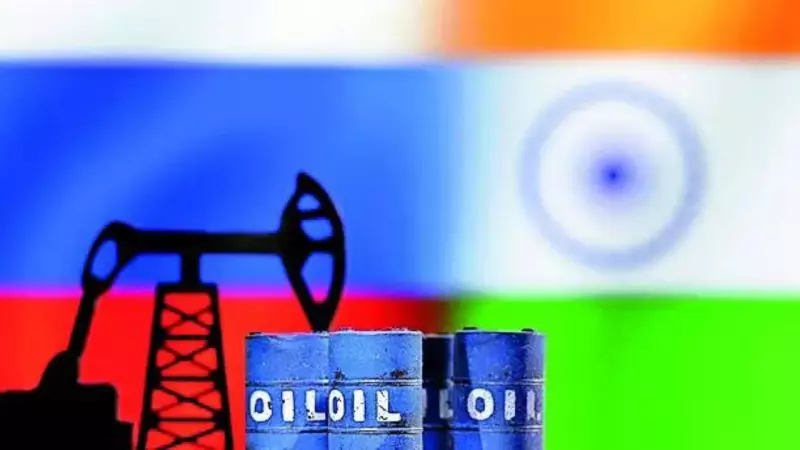
India has officially stated it is keeping a close watch on a new legislative proposal in the United States that threatens to impose massive tariffs on countries purchasing Russian crude oil. The development comes amid increasing pressure from Washington on nations like India to reduce their energy ties with Moscow.
India's Official Stance on the Proposed US Legislation
Addressing the media during a weekly briefing, External Affairs Ministry spokesperson Randhir Jaiswal confirmed India's awareness of the bill. "We are aware of the proposed bill. We are closely following the developments," Jaiswal stated on Friday. The proposed legislation, spearheaded by US Senator Lindsey Graham, specifically targets nations that continue to buy and resell Russian oil, with India and China being among the largest current buyers.
Senator Graham revealed earlier this week that former President Donald Trump has given his approval for the bill. The legislation's core provision is a staggering 500% tariff on secondary purchases and resale of Russian oil. Graham argued that the move would grant President Trump significant leverage over countries including India, China, and Brazil, aiming to dissuade them from purchasing discounted Russian oil, which he claims finances Russia's war in Ukraine.

India's Defense: Energy Security and Market Dynamics
In response to the ongoing diplomatic pressure, India has consistently defended its strategic energy purchases. Spokesperson Jaiswal reiterated the country's long-standing position, emphasizing that its decisions are driven by pragmatic economic and security considerations. "Our position on the larger question of energy sourcing is well known," he said.
Jaiswal elaborated further, highlighting the dual pillars of India's policy: "In this endeavour, we are guided by the evolving dynamics of the global market and by the imperative to secure affordable energy from diverse sources to meet the energy security needs of our 1.4 billion people." This statement underscores India's primary focus on ensuring stable and cost-effective energy supplies for its vast population.
Shifting Imports and Diplomatic Dialogues
The issue has gained fresh urgency alongside reports indicating that India has started to reduce its intake of Russian crude. In a related diplomatic exchange, Senator Graham disclosed that Indian Ambassador to the US, Vinay Kwatra, informed him of New Delhi's move to cut back purchases. The Ambassador reportedly asked Graham to convey a request to President Trump to "relieve the tariff" already imposed on India.
The US has persistently urged India to scale down imports of Russian oil, contending that Moscow utilizes the revenue to fund its military campaign in Ukraine. However, following the invasion of Ukraine in February 2022 and subsequent Western sanctions, India significantly increased its purchases of heavily discounted Russian oil. This strategic shift has dramatically altered India's import landscape.
The data reveals a profound change: Russia's share in India's total crude oil imports skyrocketed from a mere 1.7% in the 2019-20 fiscal year to a substantial 35.1% in 2024-25. This underscores how global geopolitical events have reshaped energy trade routes, with India prioritizing national interest and economic advantage in its energy procurement strategy.