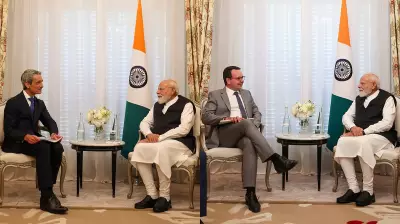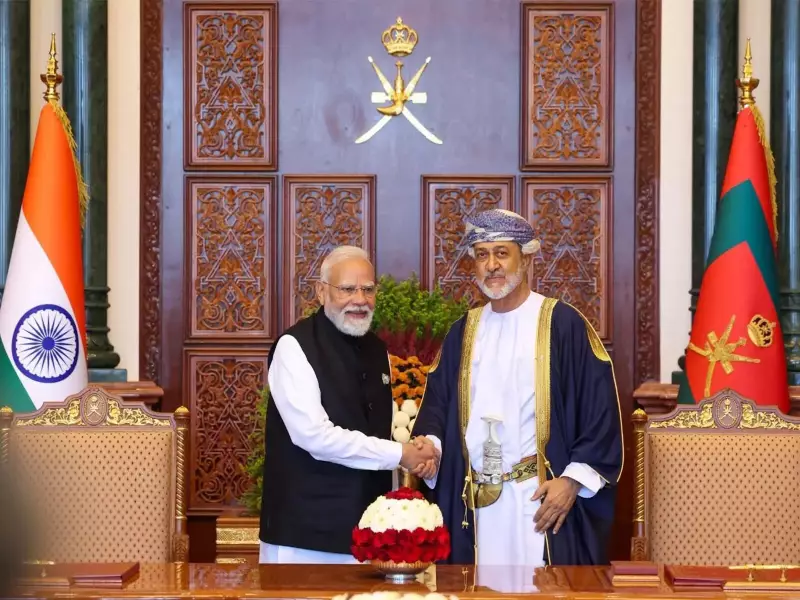
India has inked a pivotal trade agreement with Oman, marking a substantial move to weave itself deeper into global supply networks and fortify economic ties in the Gulf region. The Comprehensive Economic Partnership Agreement (CEPA), finalized during Prime Minister Narendra Modi's recent visit to Oman, is poised to significantly expand two-way trade, empower small and medium-sized exporters, and bolster India's energy security, as noted by Bank of Baroda economist Dipanwita Mazumdar.
Key Provisions and Sectoral Boost
The core of the India-Oman CEPA revolves around dramatically improving market access. Oman will provide zero-duty access on a massive 98.08 per cent of its tariff lines for Indian products, covering nearly 99.4 per cent of India's exports by value. In reciprocity, India has offered concessions on 77.79 per cent of its tariff lines, accounting for roughly 94.8 per cent of imports from Oman.
The agreement strategically targets labor-intensive sectors crucial for job creation in India, including:

- Textiles and garments
- Leather and footwear
- Gems and jewellery
- Engineering goods
These sectors, which collectively constitute around 39% of India's current exports to Oman, are expected to receive a direct competitive lift. Furthermore, the pact substantially deepens commitments in services like education, healthcare, IT, and professional services, opening new avenues for Indian firms.
Trade Dynamics and Strategic Benefits
India's exports to Oman reached $4.1 billion in the 2024-25 financial year (FY25), representing 0.9% of India's total exports. While there was a slight moderation post-FY23, exports have demonstrated robust long-term growth at a five-year compound annual growth rate (CAGR) of 12.4%. Early data for April-October 2025 shows a marginal year-on-year increase, hinting at recovery.
On the import side, India's purchases from Oman surged to $6.6 billion in FY25, primarily driven by petroleum products. This led to a trade deficit of $2.5 billion. However, a notable advantage for India is that the unit value of petroleum imports from Oman is among the lowest in the Gulf Cooperation Council (GCC), making it a cost-efficient energy partner. This pricing benefit can help India manage its oil import bill and diversify sources.
Broader Implications and Future Outlook
Bank of Baroda's assessment positions this agreement as strategically timed amid global trade realignments due to geopolitical shifts and rising tariffs. The CEPA is more than a simple trade deal; it is a tool for enhancing resilience.
Manufactured goods dominate India's export basket to Oman, with engineering goods and pharmaceuticals holding significant shares and standing to gain considerably. For sensitive agricultural items, a tariff-rate quota (TRQ) mechanism will allow limited imports at lower duties, protecting domestic interests.
Overall, the India-Oman CEPA is projected to play a constructive role in boosting export competitiveness, generating employment, and strengthening India's trade strategy in a challenging global environment. By securing better access for MSMEs and a reliable, cost-effective energy channel, the pact addresses both immediate economic and long-term strategic goals.