Significant developments are unfolding across South Asia and in India's foreign policy arena, marked by progress in a key trade negotiation, escalating civil unrest in a neighboring nation, and renewed legal and political discourse on a longstanding domestic issue.
India and New Zealand Advance Free Trade Agreement Talks
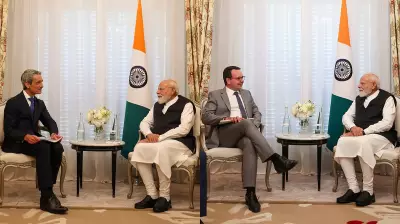
India and New Zealand are making concerted efforts to finalize a comprehensive Free Trade Agreement (FTA). Officials from both nations have been engaged in intensive negotiations, aiming to boost bilateral trade and economic cooperation. The deal is seen as a strategic move to strengthen India's economic ties in the Indo-Pacific region.
The proposed agreement is expected to cover a wide range of sectors, including goods, services, and investment. For India, enhanced market access for its skilled professionals and sectors like pharmaceuticals and textiles is a key objective. New Zealand, on the other hand, is keen on exporting its dairy products, fruits, and wood to the vast Indian market. Overcoming sensitivities in agriculture remains a critical point of discussion for the negotiators.

Political Unrest Intensifies in Bangladesh
Meanwhile, political instability and public unrest continue to grow in Bangladesh. The situation has been tense, with reports of widespread protests and clashes. The unrest poses a significant challenge to stability in the region and is being closely monitored by India, given the shared border and deep socio-economic linkages.
The origins of the current wave of protests are complex, involving political opposition movements and public discontent over various governance and economic issues. The escalating situation raises concerns about regional security and could impact cross-border trade and movement.
Babri Masjid Case: Legal and Political Echoes Continue
Domestically, the Babri Masjid case continues to generate legal and political discussions. The long-standing dispute, which reached a historic verdict by the Supreme Court of India in 2019, periodically resurfaces in public discourse. Recent mentions of the row indicate its enduring significance in the nation's socio-political landscape.
The Supreme Court's verdict had paved the way for the construction of a Ram temple at the disputed site in Ayodhya while also directing the government to allot an alternative five-acre plot for a mosque. Any contemporary references to the "Babri Row" typically involve reactions to this verdict, its implementation, or related political commentary.
Implications and the Road Ahead
These parallel developments highlight a dynamic period for India. The potential India-NZ Free Trade Deal represents a forward-looking economic diplomacy effort, crucial for post-pandemic recovery and supply chain diversification. Success here would signal India's commitment to integrating with global trade blocs on mutually beneficial terms.
The unrest in Bangladesh underscores the fragile nature of regional politics and its direct implications for India's foreign policy and border management. Stability in its immediate neighborhood is paramount for India's own security and economic interests.
Finally, the echoes of the Babri case remind us of the intricate interplay between law, history, and politics in India. While the legal process has concluded, the socio-cultural narratives continue to evolve, influencing the national conversation.
Together, these stories from December 22, 2025, paint a picture of a nation navigating complex international partnerships, regional instability, and enduring historical dialogues, all of which will shape its trajectory in the coming years.