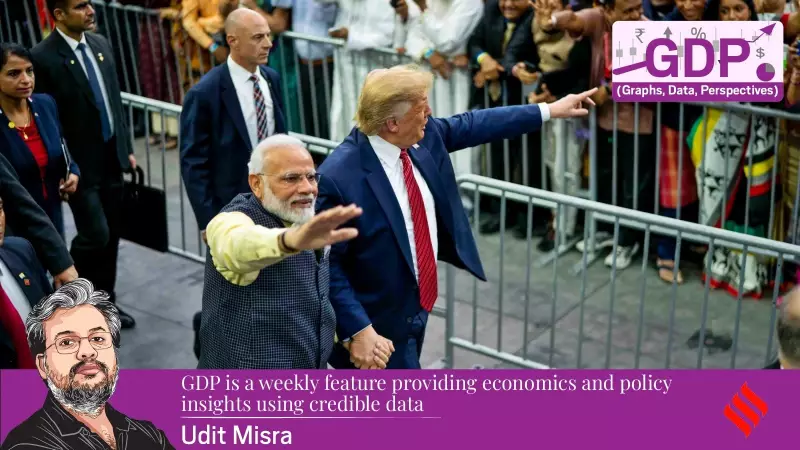
India faces a critical challenge in expanding its export markets to counter the impact of high tariffs imposed by the United States under Donald Trump. Recent data reveals a worrying slowdown in export momentum that demands immediate policy action.
December Trade Figures Show Modest Growth
India exported goods worth $38.5 billion in December 2025, according to Ministry of Commerce and Industry data released on Thursday. This represents only a 1.8% increase from the $37.8 billion recorded in December 2024. Meanwhile, imports surged to $63.55 billion during the same month, creating a substantial trade deficit of $25 billion.
Trump's Tariffs Disrupt Export Momentum
The 50% tariffs implemented by the Trump administration beginning August 2025 have significantly impacted India's export performance. HSBC Global Investment Research analysis shows that sequential export momentum weakened dramatically after the tariffs took effect.

"The sequential momentum which was averaging 0.7% month-on-month seasonally adjusted in January-July 2025 has fallen to a meagre 0.1% in August-December 2025," states the HSBC research note. This decline follows the implementation of the 50% US tariff.
Across-the-Board Export Weakness
The export slowdown affects multiple sectors:
- Electronics, engineering goods, petroleum and textiles show slowed growth
- Pharmaceuticals, chemicals, and gems & jewellery experience declining export growth
- Overall export expansion has become nearly stagnant
US Exports Decline While China Trade Rises Marginally
India's exports to the United States fell both annually and sequentially due to the tariff impact. HSBC found that average sequential momentum of export growth to the US dropped from 1.9% during January-July 2025 to -1.4% during August-December.
Exports to China increased by approximately $2 billion monthly, but this modest rise cannot offset the $7 billion monthly decline in US exports. Trade with other global markets remained essentially flat during this period.
Currency Pressure from Weak Exports
Lower export levels create pressure on India's currency. Reduced exports mean diminished demand for Indian rupees, which negatively affects exchange rates. This currency pressure adds another layer of economic challenge for policymakers.
Urgent Need for Market Diversification
The muted export growth underscores the necessity for India to diversify its trade relationships. Economic experts emphasize that Indian policymakers must intensify efforts to develop new markets and strengthen existing ones outside the United States.
Finding alternative destinations for Indian goods has become crucial to prevent high US tariffs from derailing the country's export sector entirely. The current data suggests that relying on traditional markets may no longer be sufficient for maintaining export growth.
As global trade dynamics shift under protectionist policies, India's economic strategy requires significant adaptation. The country must build more resilient trade networks that can withstand external shocks like sudden tariff increases.