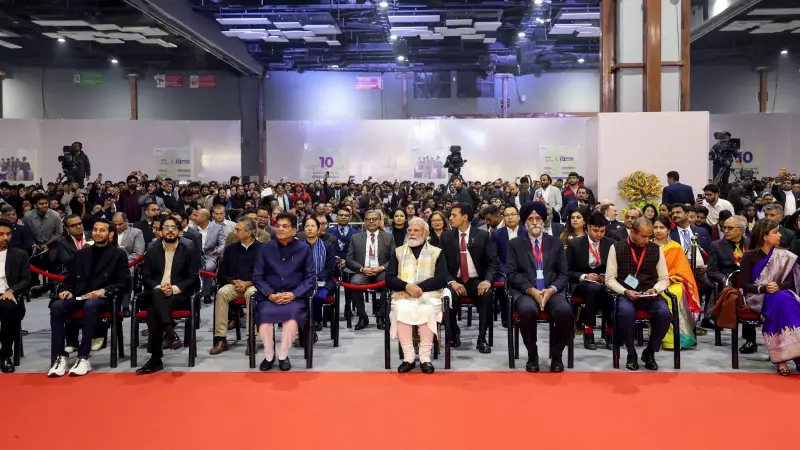
Commerce Minister Piyush Goyal has made a bold statement about the upcoming India-EU trade agreement. He described it as the "mother of all trade deals". Goyal emphasized that none of the 27 European Union member states oppose this pact.
A Comprehensive and Mutually Advantageous Deal
The deal is set to be signed on January 26. It will be comprehensive in nature. Both Indian and European interests and sensitivities will be carefully addressed. Goyal shared this information with reporters in New Delhi.
He stated clearly that no EU state has opposed the trade agreement during high-level meetings. The minister believes this deal will be the most comprehensive one. It promises mutual advantages for both parties involved.

Win-Win Partnership Based on Complementarities
An official explained the deal's balanced nature. New Delhi secured favorable terms in sectors important to India. The EU received good terms in their areas of interest. India and the EU are not in direct competition. They share complementarities, making this partnership a win-win situation.
The official also addressed concerns about the carbon border adjustment mechanism (CBAM). National interests, including those of farmers, were protected during negotiations.
Investment and Regulatory Certainty
India has been working on a new chapter in the agreement. This chapter aims to provide long-term regulatory certainty for domestic manufacturing. The goal is to attract more investment from the EU. New Delhi is deciding where to allow 100 percent foreign direct investment (FDI).
Conditions like local employment, local value addition, and use of local raw materials are part of the negotiations. India previously allowed 100 percent FDI in telecom for the UK under a trade deal. The insurance sector maintained a 74 percent FDI ceiling for UK insurers. A similar approach was taken with the European Free Trade Association (EFTA) deal.
Investment Commitments in Recent Trade Deals
Investment has become a key feature in India's trade agreements with Western partners. In exchange for lowering tariffs, India seeks solid investment commitments. The EFTA deal, signed in March 2024, includes a commitment to invest $100 billion in India over 15 years. New Zealand has also pledged $20 billion in investments.
Long Journey to Agreement
The India-EU trade agreement has been decades in the making. Talks first launched in 2007 but were abandoned in 2013. Negotiations resumed in July 2022. Both sides are now close to signing the pact.
The urgency increased after the Trump administration changed US trade policies. Protectionist measures forced trade partners to explore new markets. India aims to gain market access in labor-intensive sectors like textiles, footwear, gems, and jewellery. The EU expects better access for its automobiles and beverages.
Shared Challenge of China
A key driver behind this deal is the shared challenge posed by China. Indian industry faces pricing challenges, especially in scaling up solar energy. The EU worries about China's dominance in critical technologies. China's leading manufacturing position exposes the EU to potential risks.
The NDA government adopted a Look West trade policy. This policy focuses on signing agreements with developed countries where traders don't compete in similar sectors. While a US trade deal remains stuck, India has successfully sealed agreements with Australia, New Zealand, and the UK.
The India-EU trade deal represents a significant step in strengthening economic ties. It promises to open new opportunities for both regions in a changing global trade landscape.