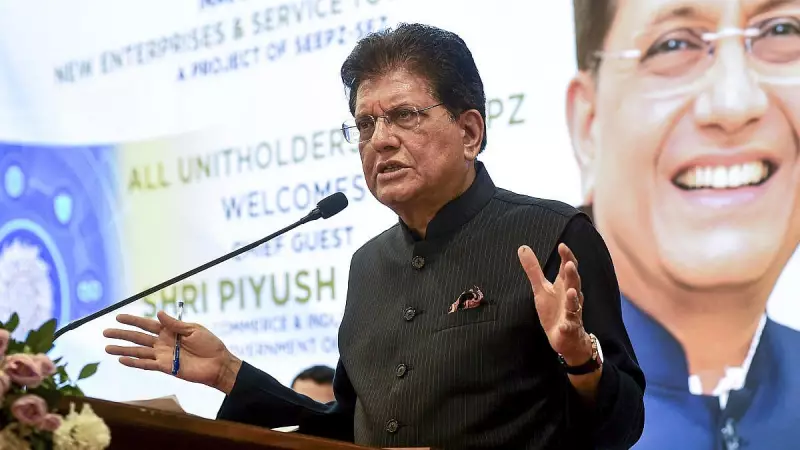
In a significant move to bolster economic ties, trade ministers from India and the European Union have issued a clear directive to their negotiating teams: speed up the talks for a comprehensive free trade agreement (FTA). The high-level push came during a meeting in Brussels between Commerce and Industry Minister Piyush Goyal and European Commission Executive Vice-President and Commissioner for Trade and Economic Security, Maros Sefcovic.
High-Level Review in Brussels
The meeting, held on 10 January 2026, served as a crucial stock-taking exercise. Both ministers undertook a detailed review of the progress made in the ongoing negotiations for the India-EU Free Trade Agreement. The discussions were focused and forward-looking, with the shared objective of overcoming lingering hurdles and injecting fresh momentum into the process.
Recognizing the strategic importance of the pact, Minister Goyal and Commissioner Sefcovic jointly instructed their respective officials to expedite the negotiation rounds. The mandate is clear: to work towards an ambitious, balanced, and mutually beneficial agreement that addresses the core interests of both economic giants.

The Road to a Strategic Partnership
The India-EU FTA negotiations have been a long-standing priority for both sides, aimed at creating one of the world's largest trading blocs. A successful deal is expected to significantly boost bilateral trade and investment by reducing tariffs, easing regulatory barriers, and enhancing market access for goods and services.
Key areas of discussion typically include:
- Market access for agricultural and industrial goods
- Trade in services and digital commerce
- Intellectual property rights (IPR)
- Sustainable development and labour standards
- Mechanisms for dispute settlement
The political directive from the top-level meeting in Brussels signals a strong commitment from both capitals to break the logjam and conclude the agreement. This high-level intervention is often crucial in complex trade talks, providing negotiators with the necessary political guidance to resolve contentious issues.
Implications for India's Trade Future
The push for an expedited FTA with the European Union aligns with India's broader strategy of forging deep and comprehensive trade partnerships with key economies. The EU is one of India's largest trading partners, and a well-structured agreement can provide Indian businesses with stable and preferential access to a high-income market of over 450 million consumers.
For the European Union, concluding an FTA with one of the world's fastest-growing major economies offers a gateway to diversify supply chains and secure a stronger foothold in the Indo-Pacific region. The meeting between Piyush Goyal and Maros Sefcovic has therefore set the stage for a potentially transformative phase in India-EU economic relations.
The coming months will be critical as officials return to the negotiating table with a renewed sense of urgency. The world will be watching to see if this high-level impetus can translate into concrete breakthroughs, paving the way for a landmark trade deal that could reshape economic dynamics between the two democracies.