India's Landmark EU Free Trade Agreement: A Strategic Triumph
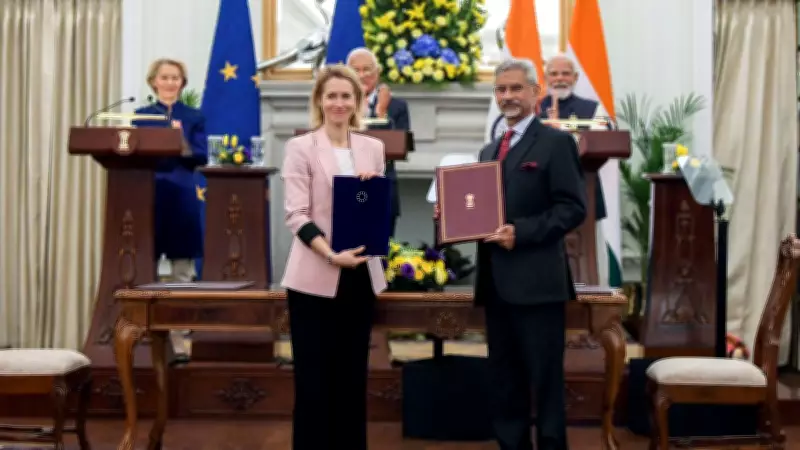
On January 27, India achieved a significant milestone by signing a comprehensive free trade agreement with the European Union, marking the culmination of two decades of arduous negotiations. This historic accord, which grants tariff exemptions on over 90 percent of goods and services, represents a pivotal moment in India's economic diplomacy and global trade strategy.
The Catalysts Behind the Breakthrough
The sudden breakthrough in negotiations, celebrated with considerable fanfare shortly after Republic Day, can be attributed to extraordinary economic pressures. Many observers within the EU had nearly abandoned hope for such an agreement, making this development particularly noteworthy. European Commission President Ursula von der Leyen's characterization of the deal as surpassing "the mother of all deals" was not mere hyperbole but reflected its strategic importance.
External forces, particularly trade pressures from the Trump administration, played a crucial role in accelerating the negotiations. The damage inflicted by previously high tariffs on certain sectors of India's economy created an imperative for swift action. Interestingly, President Trump himself claimed credit for precipitating this agreement through his trade policies, an assertion that carries some ironic validity given the circumstances.

Global and Regional Implications
At a global level, this FTA signifies a dramatic shift away from multilateral trade arrangements toward regional trading blocs. This trend has been evident over the past decade, exemplified by developments like the Trans-Pacific Partnership and its successor, the Comprehensive and Progressive Trans-Pacific Partnership. India's previous reluctance to join such agreements stemmed from concerns about widening trade gaps with China and other strategic considerations.
Regionally, the agreement is likely to cause significant dismay in Islamabad. Pakistan, which recently enjoyed attention from the Trump administration following Operation Sindoor, now faces the reality of an economy merely one-tenth the size of India's, coupled with renewed dependence on IMF bailouts. The FTA may demonstrate that Pakistan's alignment with Trump has yielded limited dividends, potentially further marginalizing the country in South Asia due to chronic economic mismanagement and excessive military influence.
Domestic Economic Impact
Within India, the agreement presents both challenges and opportunities. Some industries, particularly automotive manufacturers like Tata and Mahindra, initially experienced stock market declines following the announcement. However, this competition should ultimately benefit both producers and consumers.
Manufacturers will need to become more innovative, nimble, and cost-conscious to remain competitive. Meanwhile, Indian consumers, who have long borne the burden of extortionate import duties, can expect steady price relief and increased product choices. Middle-class consumers will gain access to European goods without paying grossly inflated prices caused by India's previous tariff regime.
The agreement will particularly impact India's beverage industry, where growing middle-class demand for wine and spirits beyond traditional beer and whiskey will be met with superior products at more attractive prices, stimulating domestic industry improvement.
Implementation Challenges and Future Prospects
New Delhi's decision to finalize this deal, while undoubtedly belated, represents a necessary response to external pressures that prompted otherwise lethargic trade negotiators to act with urgency. The successful implementation now depends on India's bureaucracy, which must demonstrate unprecedented efficiency and zeal in executing the agreement's terms.
If India hopes to achieve Prime Minister Modi's ambitious goal of becoming a developed nation by 2047, this FTA represents a crucial step forward. The agreement strengthens India's position domestically, regionally, and globally, creating a foundation for sustained economic growth and enhanced international standing.