India is intensifying its diplomatic and economic efforts to finalize significant trade pacts with two of its largest partners: the United States and the European Union. According to a senior official from the Ministry of External Affairs (MEA), negotiations are actively underway, with a clear focus on addressing remaining issues to achieve mutually beneficial outcomes.
MEA Confirms Ongoing High-Level Engagement
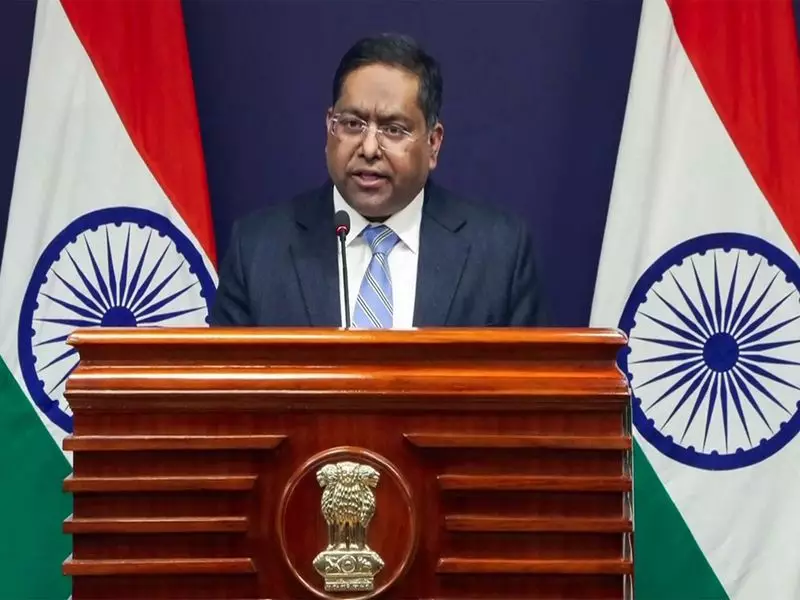
During a weekly media briefing on Friday, MEA spokesperson Randhir Jaiswal provided a crucial update on these critical economic dialogues. Jaiswal confirmed that India is "engaged with the US and the EU" to conclude the proposed trade agreements. He emphasized that the government is working diligently to resolve the pending issues that have been points of discussion in these complex negotiations.
The spokesperson's statement underscores the high priority the Indian government places on securing these deals. These agreements are seen as pivotal for enhancing market access, boosting exports, and attracting foreign investment, thereby fueling India's economic growth ambitions.

Focus on Balanced and Mutually Beneficial Outcomes
The core of India's negotiation strategy, as highlighted by Jaiswal, is to ensure the final agreements are equitable. The objective is to arrive at "balanced trade agreements which are beneficial for both sides." This principle is non-negotiable for New Delhi, which seeks to protect the interests of its domestic industries, farmers, and service providers while gaining deeper entry into Western markets.
With the United States, discussions have revolved around a potential "limited" trade deal or a broader comprehensive agreement. Key discussion points often include market access for agricultural products, medical devices (like stents and knee implants), and IT products, alongside intellectual property rights and digital trade issues.
Regarding the European Union, the talks to resume the long-stalled Broad-based Trade and Investment Agreement (BTIA) have gained fresh momentum. Both sides have held multiple rounds of negotiations, working to bridge gaps on tariffs, automotive sector rules, geographical indications, and sustainable development clauses. A successful pact with the EU, a massive trading bloc, would be a landmark achievement for Indian trade policy.
Strategic Importance and Economic Implications
Concluding these trade agreements holds immense strategic and economic value for India. In a global landscape marked by supply chain reconfigurations and geopolitical shifts, strong trade ties with the US and EU are crucial.
These pacts are expected to:
- Provide a significant boost to bilateral trade and investment flows.
- Enhance the competitiveness of Indian products in key Western markets by reducing or eliminating tariffs.
- Strengthen India's position as a reliable and integral part of global supply chains.
- Create new opportunities in sectors like textiles, pharmaceuticals, IT services, and agriculture.
The MEA's proactive role in these trade talks highlights the interconnected nature of modern diplomacy and economics. While the Commerce Ministry leads the technical negotiations, the MEA's involvement is vital for aligning the trade discussions with broader foreign policy objectives and managing the geopolitical dimensions of these partnerships.
As Randhir Jaiswal indicated, the work is ongoing. While no specific timeline for conclusion was announced, the confirmation of active engagement signals that India is committed to navigating the final hurdles. The business and investment communities in India and abroad will be closely watching for further breakthroughs in these pivotal negotiations that could reshape India's trade landscape for decades to come.