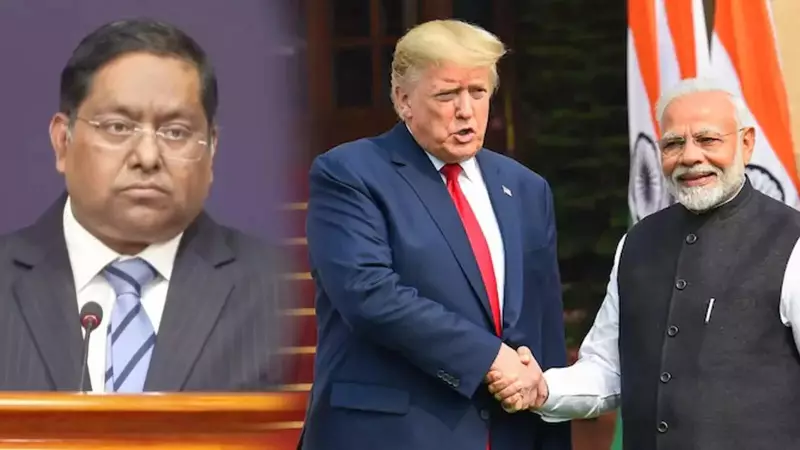
India has issued a firm rebuttal to claims from Washington suggesting that crucial trade negotiations between the two nations have stalled due to a lack of direct communication between their leaders. The Ministry of External Affairs (MEA) has categorically rejected this narrative, providing detailed counterpoints that underscore the strength and frequency of high-level engagement.
MEA Sets the Record Straight on Diplomatic Engagement
Responding to remarks made by US Commerce Secretary Howard Lutnick, the MEA spokesperson, Randhir Jaiswal, presented a clear timeline of diplomatic contact. The ministry revealed that Prime Minister Narendra Modi and US President Donald Trump held eight telephone conversations in the year 2025 alone. These discussions were not merely courtesy calls; they covered a wide spectrum of issues central to the India-US bilateral partnership.
Jaiswal emphasized that framing the progress of a complex trade agreement around personal phone calls is a misrepresentation of how statecraft functions. India's position is that such significant pacts are the result of structured, professional negotiations, not personal pressure or political optics. The message from New Delhi was unambiguous: diplomacy cannot be reduced to "phone-call politics."

Structured Trade Talks Were Progressing
Contrary to the impression of a stalled process, the MEA outlined the concrete steps taken towards a trade deal. Formal, structured negotiations on a trade agreement commenced in February 2025, with several rounds of detailed discussions held subsequently. Officials from both countries were actively engaged, and these talks had brought the two sides notably closer to a potential agreement.
The Indian statement implicitly suggested that attributing any delay or challenge in the talks to a communication gap at the leadership level is factually incorrect. By highlighting the eight calls, India aimed to demonstrate that the political will and channels for dialogue were very much open and active throughout the period in question.
Broader Context: Energy Independence and National Interest
The MEA's detailed response did not occur in a vacuum. It comes at a time when the United States has been escalating pressure on India regarding its continued import of Russian oil, including threats of imposing punitive tariffs. India's rejoinder on the trade talks appears to be part of a broader assertion of its strategic autonomy.
New Delhi has consistently reiterated that its decisions in the realms of energy security and international trade are sovereign choices, driven by national interest and pragmatic market realities. The firm rejection of the US claim on the trade talks serves as a reaffirmation of this principle. It signals that while India values its strong and multifaceted engagement with the US, it will not conduct its diplomacy under the shadow of public pressure or inaccurate characterizations.
The episode underscores the complex dynamics of one of the world's most significant bilateral relationships, where robust partnership coexists with firm assertions of independent policy-making.