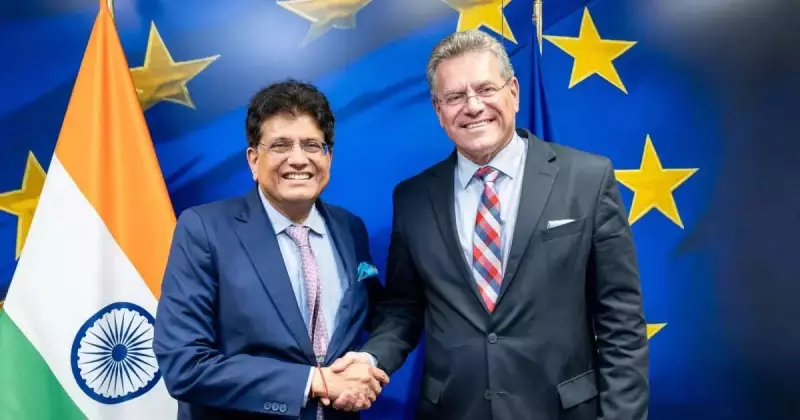
In a significant push to finalize a long-awaited trade pact, India and the European Union have taken concrete steps to accelerate negotiations for a proposed Free Trade Agreement (FTA). The momentum came during Union Commerce and Industry Minister Piyush Goyal's intensive two-day visit to Brussels, which concluded on January 9, 2026.
Strategic Meetings to Break the Logjam
Piyush Goyal held detailed discussions with EU Trade and Economic Security Commissioner Maros Sefcovic in the Belgian capital. The high-level engagement was aimed at providing fresh impetus to the talks that have been in the works for years. According to the Indian Ministry of Commerce, the dialogue served to review the headway made in several critical and complex areas of the potential agreement.
The core negotiating chapters under scrutiny included Market Access for Goods, Rules of Origin, and Services. Both sides recognized the need to resolve outstanding issues and directed their respective negotiating teams to work with renewed vigor. The strategic guidance offered by the leaders is expected to help bridge gaps and speed up the overall process.

Balancing Ambition with Domestic Priorities
The talks were not just about liberalizing trade. A key focus was on striking a careful balance. Indian negotiators are working to ensure that the ambitious trade goals align with domestic priorities, particularly the protection of sensitive sectors.
Safeguarding the interests of Indian farmers and micro, small, and medium enterprises (MSMEs) remains a non-negotiable pillar of India's stance. Simultaneously, the agreement is viewed as a vital channel for enhancing India's integration into global value and supply chains, offering its industries greater access to the vast EU market.
A Mutually Beneficial Pact on the Horizon
Officials from both sides have emphasized that the high-level engagement underscores a strong political commitment to conclude a fair, balanced, and mutually beneficial trade agreement. The India-EU FTA is seen as a transformative economic partnership that could redefine trade relations between the world's largest democracy and one of its biggest trading blocs.
The Brussels visit has successfully moved the needle, setting the stage for more frequent and focused negotiating rounds in the coming months. All stakeholders are now watching closely to see if this renewed push can finally convert years of dialogue into a substantive deal.