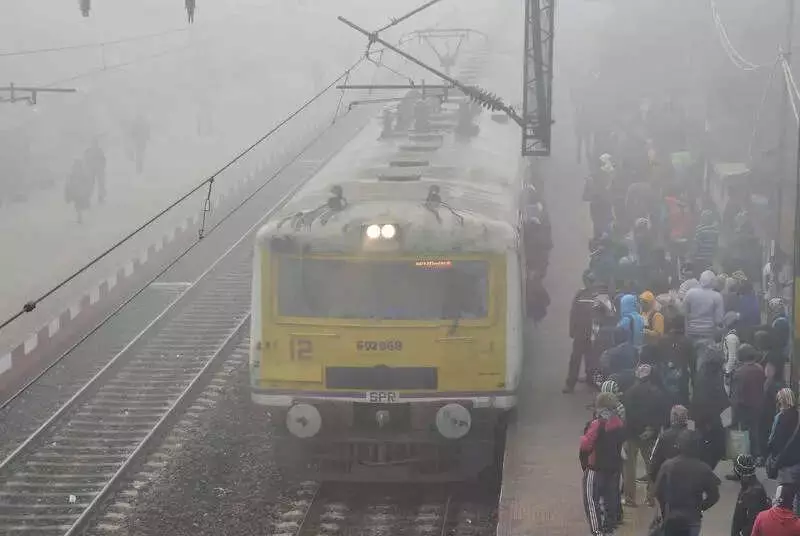
Dense fog blanketing northern India on Wednesday severely disrupted railway operations, causing significant delays and cancellations for several long-distance trains arriving at Chandigarh. The adverse weather conditions led to a cascade of schedule disruptions, leaving passengers stranded and frustrated.
Multiple Train Cancellations Announced
In response to the challenging visibility and operational hazards posed by the thick fog, railway authorities were forced to cancel as many as four key trains destined for Chandigarh. The cancelled services included the 15903 Lucknow Chaarbagh to Chandigarh train, the 14504 Sri Vaishno Devi Katra-Kalka Express, the 03311 Dehradun Express, and the 11905 Hoshiarpur Express. These cancellations were a preventive measure to ensure passenger safety amid the poor weather.
Severe Delays Plague Arrivals
For trains that did run, the journey was far from smooth. Delays of several hours became the norm. The situation was starkly illustrated by the Prayagraj-Chandigarh Unchahaar Express (14217), which reached its destination approximately 10 hours behind its scheduled time. This massive delay underscored the extent of the operational challenges faced by the railways.

Widespread Impact on Key Services
The disruption was not limited to a few services. A host of other prominent long-distance trains were also caught in the logistical snarl. The list of affected trains included:
- Kerala Sampark Kranti Express (12217)
- Kalka Superfast Express (22455)
- Amb Andaura Super Fast Express (22709)
- Goa Sampark Kranti Express (12449)
- Netaji Express (12311)
- Chandigarh Super-Fast Express (20493)
- Hemkunt Express (12217)
The widespread nature of these delays points to a systemic impact on rail traffic across the northern region due to the persistent fog.
The incident highlights the recurring vulnerability of India's rail network to seasonal weather phenomena like winter fog. While safety remains paramount, such large-scale disruptions cause considerable inconvenience to travelers and underscore the need for robust contingency planning and passenger communication during such events.