

Indian Exporters Grapple with Mounting Middle East Conflict Fallout
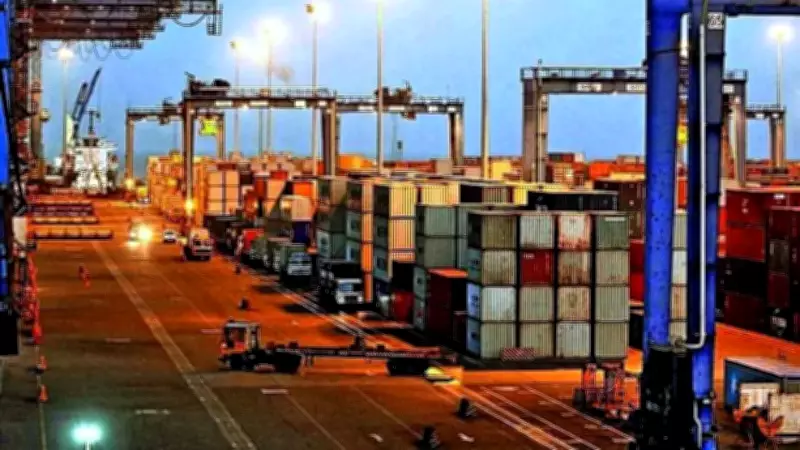
Indian exporters and logistics providers are intensifying efforts to minimize disruptions stemming from the escalating Middle East conflict. They are closely monitoring shipping carriers, advancing consignment planning, and exploring alternative routes. This defensive stance comes as freight rates, insurance premiums, and transit times surge dramatically amid heightened uncertainty surrounding the Strait of Hormuz.
Exporters Shift Routes and Brace for Extended Delays
According to reports, shipping lines are increasingly rerouting consignments around the Cape of Good Hope, circumnavigating Africa to avoid the volatile Strait of Hormuz and Red Sea. These diversions add approximately 3,500 nautical miles to voyages, delaying shipments by 10 to 15 days and significantly inflating fuel and insurance costs. Consequently, deliveries to key markets like the US and Europe are expected to become more expensive. Industry experts warn that longer voyages could tighten vessel and container availability in the coming weeks, further driving up freight rates.
Federation of Indian Export Organisations (FIEO) president SC Ralhan emphasized, "Things are not improving, but we are trying to manage our exports. Shipping lines should not take undue advantage of this situation." The ongoing geopolitical tensions are creating substantial uncertainty for India's exports, with exporters reporting additional surcharges, extended transit times, and higher insurance premiums.

Apparel and Manufacturing Sectors Under Pressure
An apparel industry expert noted that export orders to the Middle East may weaken in the coming months as war-affected markets experience stress and consumer demand softens. Approximately 11.8% of India's apparel exports go to Middle Eastern countries directly impacted by the conflict. India's ready-made garment exports to eight countries—UAE, Saudi Arabia, Israel, Kuwait, Oman, Qatar, Iraq, Bahrain, and Iran—reached $1.9 billion in 2024-25, up from $1.82 billion in 2023-24. Overall, India's total garment exports rose to $15.97 billion from $14.51 billion during the same period.
The expert also cautioned that textile manufacturers reliant on imported raw materials, such as synthetic fabrics, trimmings, and embellishments, could face shortages or cost escalations if disruptions persist. This would likely lead to higher final product costs, further straining the sector.
Government Weighs Support Measures for Exporters
Businesses have called for regular advisories, engagement with shipping lines on surcharges, ensuring vessel and container availability, flexibility in compliance timelines, and closer coordination between industry bodies and the government to manage the crisis effectively. The commerce department is actively developing support measures, including prioritizing the shipment of perishables—even by air—and examining insurance support for exporters. Officials are also exploring the feasibility of rerouting goods through alternative ports in the Middle East.
A senior government official acknowledged that there will be "some impact," likely visible in this month's trade data, but exporters have been advised to explore other markets to fill any gaps. An inter-ministerial group is monitoring the situation daily and coordinating with exporters, while customs, the shipping ministry, and DG Shipping have already announced some initial measures to alleviate the strain.
Council for Leather Exports Chairman Ramesh Kumar Juneja highlighted the severity, stating, "Shipments to the Persian Gulf have stopped completely. Insurance premiums have increased. On a 20-foot container, it has increased by $1,200 and $2,400 on 40 ft." This underscores the acute challenges faced by exporters as they navigate the turbulent geopolitical landscape.






