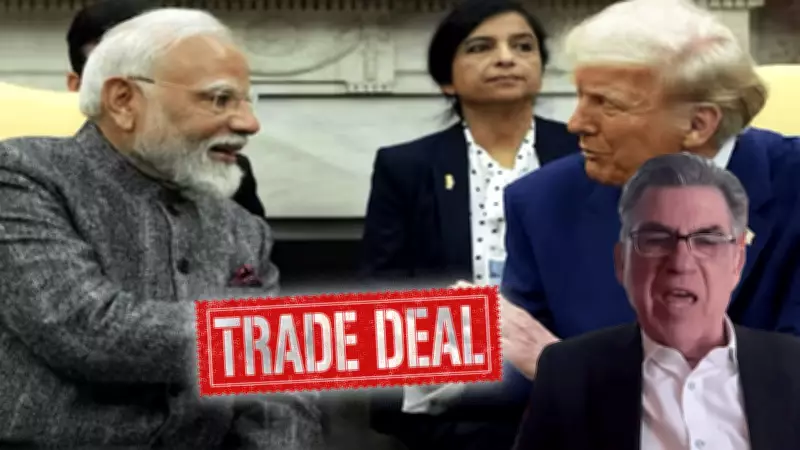
Former US Trade Representative Applauds Historic India-US Trade Agreement
Mark Linscott, the former Assistant United States Trade Representative, has publicly celebrated the recently concluded trade pact between India and the United States, describing it as a major breakthrough that connects the world's leading economies. His reaction underscores a pivotal moment in negotiations characterized by intense pressure, strategic pauses, and unwavering persistence.
A Sigh of Relief as Tariffs Are Slashed
Linscott expressed genuine relief upon learning that tariffs on key Indian exports to the US were successfully reduced to 18 percent. This crucial development effectively ends months of economic uncertainty that had clouded bilateral trade relations. "This tariff reduction marks a concrete step forward," he implied, highlighting the tangible benefits of the agreement.
Navigating Political Sensitivities and Derailed Talks
The path to this agreement was far from smooth. Linscott revealed that while negotiators from both nations had laid substantial groundwork earlier, the talks faced significant derailment. Complex geopolitical issues, prominently including India's stance on Russian oil imports and other sensitive political matters, created substantial roadblocks. These challenges ultimately made high-level diplomatic intervention unavoidable.

Credit to Leadership: Modi and Trump's Decisive Role
Linscott credited the decisive actions of Prime Minister Narendra Modi and President Donald Trump for breaking the impasse. He emphasized that both leaders recognized the growing momentum for a deal and acted with determination to steer the negotiations toward a successful conclusion. This top-level engagement proved essential in overcoming the entrenched diplomatic and economic hurdles.
The Reality of Trump's Trade Tactics
While analyzing the negotiation process, Linscott acknowledged the distinctive nature of the Trump administration's trade policy. He noted its heavy reliance on a strategy involving:
- Public threats and pressure
- The imposition of reciprocal tariffs
- A general atmosphere of "controlled chaos"
According to Linscott, such tactics, though controversial, were an undeniable reality of the political and economic landscape during these talks.
The Compelling Economic Logic of the Pact
Beyond the political maneuvering, Linscott strongly underlined the powerful economic rationale behind the agreement. He framed it as a strategic move to forge closer ties between the United States, the world's largest economy, and India, which is poised to become the third-largest global economy. Strengthening this economic partnership is viewed as mutually beneficial for long-term growth and stability.
Phase One Deal: A Foundation for Future Negotiations
Importantly, Linscott described the current agreement as an interim Phase One deal. He issued a clear warning that this pact, while significant, is not the final chapter. Deeper and potentially more complex negotiations on broader trade issues still lie ahead, indicating that this breakthrough is a foundational step rather than a comprehensive conclusion.
The insights from the former US trade official paint a picture of a hard-won diplomatic achievement, born from economic necessity and high-stakes political will, setting the stage for the next phase in India-US economic relations.