Historic EU-Mercosur Trade Pact Finally Signed After Quarter-Century Negotiations
The European Union and the Mercosur bloc of South American nations have finally sealed their landmark free trade agreement. This monumental pact comes after more than twenty-five years of intense negotiations between the trading partners.
Lula's Notable Absence from Signing Ceremony
While the signing ceremony took place in Paraguay's capital Asuncion, Brazilian President Luiz Inacio Lula da Silva chose not to attend. This decision surprised many observers given Lula's vigorous advocacy for the agreement throughout his political career.
Instead, Brazil sent Foreign Minister Mauro Vieira to represent the country at the historic event. Argentina's Javier Milei and Uruguay's Yamandu Orsi joined Paraguay's Santiago Pena for the formal signing.

Experts suggest Lula's absence may reflect his disappointment that the deal wasn't finalized in December when Brazil held Mercosur's rotating presidency. The Brazilian leader has invested significant political capital in advancing these negotiations.
Creating One of World's Largest Free Trade Zones
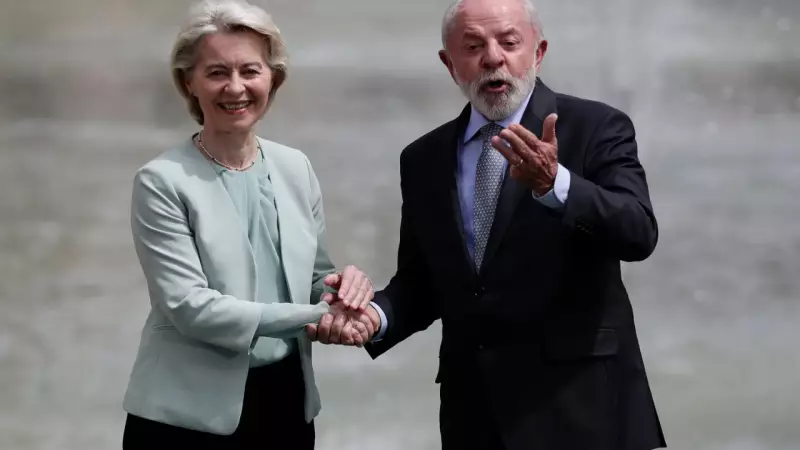
President Lula emphasized the agreement's historic scale during remarks in Rio de Janeiro alongside European Commission President Ursula von der Leyen. "Tomorrow in Asuncion, we will make history by creating one of the world's largest free trade areas," Lula declared.
The pact brings together approximately 720 million people across two continents. It covers economies with a combined GDP exceeding $22 trillion, establishing a formidable economic partnership.
Von der Leyen praised Lula's personal commitment to the agreement. "The political leadership, the personal commitment and passion that you have shown are truly second to none," she told the Brazilian president.
Strategic Implications Beyond Economics
This agreement carries significant geopolitical weight according to analysts. The deal represents a strategic victory for both the European Union and Mercosur at a time when global trade dynamics are shifting.
Roberto Goulart Menezes, an international relations professor at the University of Brasilia, noted the political symbolism. "For the European Union, this shows the group is betting on diversification of partners and multilateralism," he explained.
The timing is particularly notable as former U.S. President Donald Trump promotes his "America First" policies. Von der Leyen highlighted this contrast, stating the agreement demonstrates "the power of partnership and openness" rather than isolationism.
Economic Benefits and Future Ambitions
The trade pact grants South American nations improved access to European markets for agricultural products. Brazil's government investment agency Apex estimates EU-bound exports like instant coffee, poultry and orange juice could generate $7 billion in coming years.
However, President Lula made clear Mercosur has broader ambitions. "We want to produce and sell industrial goods with higher added value," he stated, rejecting what he called the "eternal role" of commodity exporters.
European Council President Antonio Costa addressed concerns about fairness. "It's a trade deal, but it's also an investment agreement," he told journalists, emphasizing that the approach differs from simply extracting natural resources.
Symbolic Message About Partnership Equality
Flavia Loss, an international relations professor in Sao Paulo, interpreted Lula's absence as strategic messaging. "I see Lula's absence as signaling: 'The deal is important but we're not going to change everything for them,'" she observed.
This perspective suggests Brazil and Mercosur are asserting their desire for equal partnership terms with the European Union. The delayed signing and ceremonial absence both reinforce this position.
The agreement includes all four original Mercosur members: Brazil, Argentina, Paraguay and Uruguay. Bolivia, the newest member, can join the pact in future years despite not participating in negotiations.
This landmark trade deal represents both an economic breakthrough and a political statement about international cooperation in an increasingly fragmented global economy.