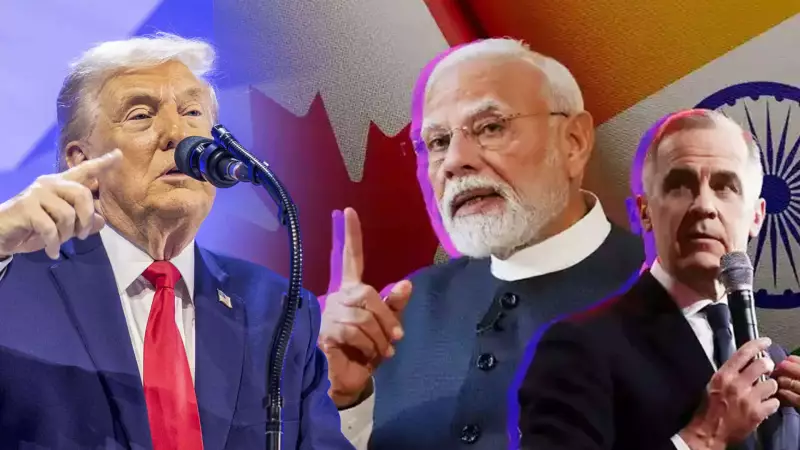
In a significant geopolitical realignment, Canada is actively strengthening its economic ties with India as a strategic response to mounting pressure from the United States under the administration of former President Donald Trump. This pivot marks a deliberate effort by Ottawa to safeguard its economic sovereignty and future growth prospects in an increasingly volatile global trade environment.
Escalating US Pressure Forces Canadian Rethink
The catalyst for this strategic shift stems from repeated tariff threats and provocative political rhetoric emanating from Washington. Trump's characterization of Canada as a potential "51st state" has starkly highlighted the nation's vulnerability to American economic dominance, compelling Canadian policymakers to urgently explore alternative partnerships. This situation has exposed the limitations of over-reliance on a single trading partner, even one as historically close as the United States.
Why India Emerges as the Ideal Partner
India presents a compelling solution to Canada's strategic dilemma. As a fellow democracy facing similar US tariff pressures, India offers complementary economic strengths that align perfectly with Canadian needs. For Canada, this partnership promises enhanced energy security and access to critical minerals essential for modern industries. Simultaneously, it provides a valuable strategic foothold in the North American market for Indian businesses.

Diplomatic relations between the two nations are warming considerably after a period of relative coolness. The anticipated visit of Canadian Prime Minister Mark Carney to New Delhi symbolizes this renewed engagement and sets the stage for substantive negotiations.
The Comprehensive Economic Partnership Agreement Vision
Central to this burgeoning relationship is the proposed Comprehensive Economic Partnership Agreement (CEPA). Both governments have set an ambitious target to elevate bilateral trade to fifty billion dollars by the year 2030. This agreement aims to reduce trade barriers, facilitate investment flows, and create a more predictable business environment for enterprises in both countries.
Beyond Economics: A Strategic Realignment
This Canadian pivot toward India transcends mere commercial considerations. It reflects a deeper recognition of how global trade is becoming increasingly weaponized in geopolitical contests. Canada perceives India not merely as a trading partner but as a stable democratic counterweight to unpredictable American pressure.
This realignment signals a broader transformation in the world order: when traditional centers of power adopt coercive economic tactics, nations are compelled to seek new alliances. India's growing economic stature and diplomatic influence position it as a natural destination for countries seeking to diversify their strategic partnerships.
The evolving Canada-India relationship exemplifies how middle powers are navigating a multipolar world where economic security requires multiple reliable partners rather than dependence on a single dominant ally.