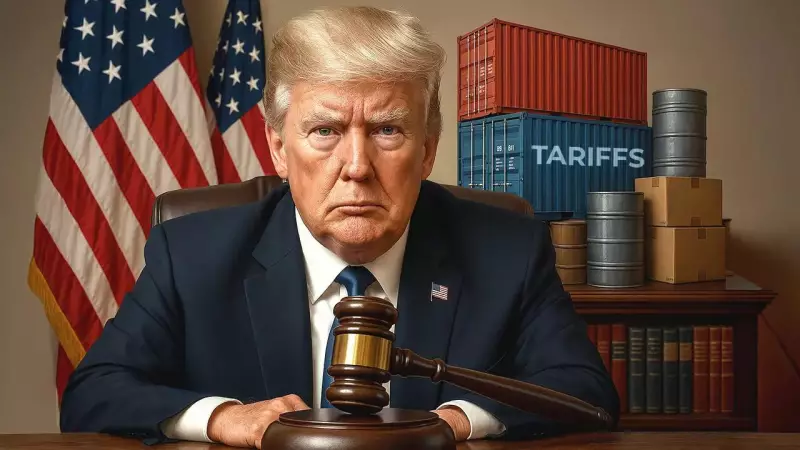
Canada's China EV Deal Signals Global Trade Realignment Amid Trump Tariffs
President Donald Trump's aggressive tariff strategy is reshaping global trade patterns. Long-standing American partners are actively pursuing alternatives, with China emerging as a key beneficiary of this shift.
Canada's Striking Departure
Canada delivered the clearest signal yet of this global realignment on Friday. Ottawa cut its 100% import tax on Chinese electric vehicles. In exchange, China sharply reduced tariffs on Canadian farm exports, particularly canola seeds. This move marks a dramatic departure from Canada's previous alignment with Washington on China trade policy.
"It's a huge declaration of realignment in Canada's economic relations," said Edward Alden, a senior fellow at the Council on Foreign Relations. "The economic threat from the United States is now perceived by Canadians as far bigger than the economic threat from China. So this is a big deal."

Allies Look Beyond the US Market
Canada is not acting alone. As Trump imposes sweeping tariffs on imports from nearly every country, major economies are accelerating efforts to reduce their dependence on the American market.
The European Union is expected to formally sign a trade pact with the Mercosur bloc, which includes Brazil, Argentina, Uruguay, Paraguay and Bolivia. The EU is also pursuing a trade agreement with India. Meanwhile, China, hit by US tariffs since Trump's first term, has quietly diversified its exports toward Europe and Southeast Asia.
That diversification strategy appears to be working. Official data released this week shows China reported a record $1.2 trillion trade surplus with the rest of the world in 2025. This occurred despite a sharp fall in its exports to the United States.
Trump's Unpredictable Tariff Policy
Since returning to the White House in January, Trump has overturned decades of US trade policy. He has imposed double-digit tariffs on imports from almost all nations. The President argues these measures will raise government revenue, protect domestic industries, and force manufacturing back to American soil.
Yet the application of these tariffs often appears arbitrary. Trump has threatened countries over political disputes. For instance, he targeted Brazil over the prosecution of former president Jair Bolsonaro. On Friday, he warned of tariffs against nations opposing his push to wrest control of Greenland from Denmark.
Why Canada Pivoted to Beijing
Canada's new agreement with China represents a complete reversal. In 2024, Ottawa imposed 100% tariffs on Chinese EVs, mirroring US concerns that low-cost Chinese vehicles could overwhelm North American automakers.
The economic logic for the shift is now compelling. China cut tariffs on Canadian canola from 84% to just 15%. This offers major relief for Canadian farmers who rely heavily on export markets.
Simultaneously, Trump's retreat from green-energy priorities has altered calculations in Ottawa. "The Trump administration, favoring fossil fuels over green energy, is actively hostile to EV production in North America," said economist Mary Lovely of the Peterson Institute for International Economics.
"China's strengths in the electric vehicle sector are undeniable," Canadian Prime Minister Mark Carney said on Friday. "China produces some of the most affordable and efficient energy efficient vehicles in the world. To build our own competitive EV sector, we need to learn from innovative partners."
Political Risks and Domestic Opposition
Still, this strategic shift carries significant political risk. Relations between Ottawa and Beijing have been strained since 2018. That year, China detained two Canadians after Canada arrested a Huawei executive at Washington's request.
Domestic opposition has also surfaced quickly. Ontario Premier Doug Ford warned the deal could hurt Canadian autoworkers. "Make no mistake: China now has a foothold in the Canadian market and will use it to their full advantage at the expense of Canadian workers," Ford said in a social media post.

Prime Minister Carney countered these concerns. He emphasized the deal is limited in scope. It initially allows China to export 49,000 EVs at a reduced tariff. This number would rise to about 70,000 vehicles over five years.
USMCA Renewal Looms Large
The biggest uncertainty for Canada lies south of the border. The US-Mexico-Canada Agreement (USMCA) comes up for renewal this year. Trump is expected to demand changes designed to shift manufacturing to the United States. He could potentially threaten to withdraw from the pact altogether.
This creates economic peril for Canada, which sends 75% of its goods exports to the United States.
"This will make the talks more complicated," said William Reinsch of the Center for Strategic and International Studies. "Trump will not be pleased. He will certainly make it an issue in the USMCA talks."
Trump struck a surprisingly conciliatory note on Friday. He said, "If you can get a deal with China, you should do that." For his part, Prime Minister Carney noted the agreement with Beijing is preliminary. It leaves room for adjustments if geopolitical tensions escalate.
A Clear Signal to Washington
Analysts say the message from Ottawa is now unmistakable. "It sends a big signal that Canada is looking to other partners and has options," said economist Mary Lovely. "Canada would rather walk away from USMCA than make humiliating compromises that serve only American interests."
The global trade map is being redrawn in real time. Traditional alliances are shifting as nations respond to an unpredictable American trade policy. Canada's deal with China may be just the beginning of a broader realignment.