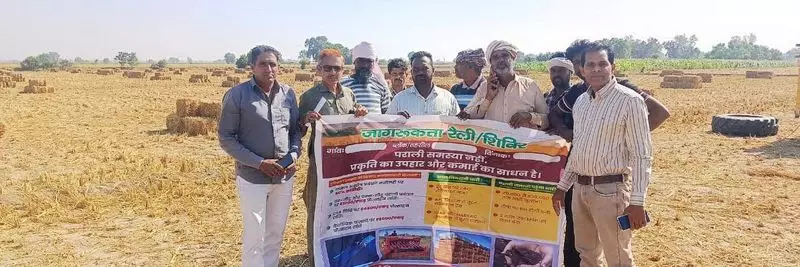
In a significant move to combat air pollution, agriculture department officials in Sirsa district are actively encouraging farmers to adopt sustainable stubble management practices instead of resorting to burning crop residue.
Official Campaign Against Stubble Burning
The Agriculture Department has launched a comprehensive awareness campaign across Sirsa district, focusing on educating farmers about the environmental and agricultural benefits of alternative stubble management methods. Officials are conducting field visits and meetings with farming communities to demonstrate practical solutions for handling paddy straw without setting it on fire.
During recent interactions with farmers in the district, agriculture experts emphasized that mixing stubble into soil represents a far more beneficial approach than burning. This method not only prevents air pollution but also enhances soil fertility by adding organic matter back into the earth. The campaign comes at a crucial time when stubble burning typically increases in northern Indian states, contributing significantly to deteriorating air quality in the region.

Practical Alternatives to Burning
Agriculture department officials are promoting several effective techniques for managing crop residue without environmental damage. The primary method being advocated involves using specialized machinery to chop and incorporate the stubble directly into the soil. This process helps in improving soil structure, increasing water retention capacity, and reducing the need for chemical fertilizers.
Farmers are being educated about how decomposed stubble acts as natural manure, providing essential nutrients to subsequent crops. The officials have explained that while burning might seem like a quick solution, it actually damages the soil by killing beneficial microorganisms and reducing long-term productivity. The awareness sessions also cover the proper use of equipment like happy seeders and super straw management systems that make stubble incorporation more efficient.
Government Support and Future Initiatives
The Agriculture Department is not just offering advice but also facilitating access to the necessary resources and equipment. Officials have assured farmers of government support in obtaining machinery for stubble management through various subsidy schemes. The department is working to ensure that modern agricultural equipment becomes more accessible to small and marginal farmers in the region.
Regular monitoring and follow-up activities are planned to track the adoption of these sustainable practices. The department aims to create a model district where stubble burning becomes the exception rather than the rule. Success in Sirsa could set a precedent for other agricultural regions facing similar challenges with crop residue management.
Farmers who have already adopted these methods shared positive experiences during the interactions, reporting improved soil health and reduced input costs over time. The agriculture department plans to scale up these success stories to encourage wider adoption among the farming community.