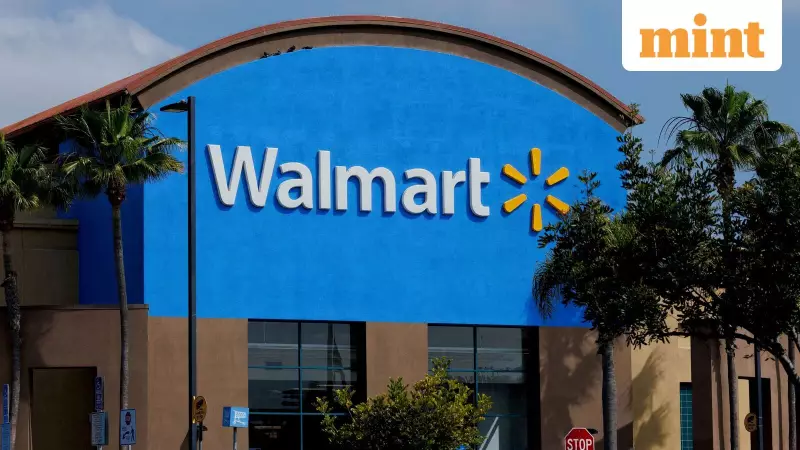
In a significant reshuffle for global markets, retail behemoth Walmart Inc. is set to join the prestigious Nasdaq 100 Index, while pharmaceutical giant AstraZeneca Plc will exit. Nasdaq Global Indexes made the official announcement on Friday, 9 January.
Effective Date and Market Context
The index change will be implemented before the market opens on Monday, 20 January. This adjustment is part of the index's annual rebalancing process. It is noteworthy that US markets will remain closed on 19 January for a public holiday, making the 20th the first trading day under the new configuration.
Walmart's inclusion is a direct consequence of its landmark decision last year to transfer its stock listing from the New York Stock Exchange (NYSE) to the Nasdaq. This move is recorded as the largest exchange transfer in history, setting the stage for its entry into this key benchmark.

Walmart's Meteoric Rise and AI Push
The American multinational retailer has seen its fortunes soar, with its market valuation now exceeding $920 billion. This impressive growth is fueled by robust sales and market share gains, as consumers increasingly prioritise value and essential goods.
Beyond its physical stores, Walmart is aggressively expanding its digital frontier. According to a Bloomberg report, its US e-commerce division is projected to become profitable this year, supported by strong growth in advertising, marketplace, and membership revenues.
The company, with major backers like Vanguard Group and BlackRock, is also deepening its technological investments. It has ramped up the use of artificial intelligence (AI) in internal operations such as scheduling and supply-chain management. In a customer-facing move, Walmart has started rolling out AI-powered shopping tools developed in partnership with OpenAI, the creator of ChatGPT.
AstraZeneca's Exit and Shifting Investor Focus
AstraZeneca's removal from the Nasdaq 100 marks a retreat from its pandemic-driven highs. The company had earned its spot in the index largely on the back of the success of its Covid-19 vaccine, as noted by Bloomberg.
However, its stock performance has lagged as revenue from vaccines has declined. Investor attention has now pivoted to new medical frontiers, particularly the weight-loss and obesity treatments being pioneered by rivals like Novo Nordisk and Eli Lilly.
The Power and Performance of the Nasdaq 100
The Nasdaq-100 Index is a world-renowned benchmark that tracks the performance of the 100 largest non-financial companies listed on the Nasdaq stock market. It encompasses a wide array of industries and sectors.
Its influence on global finance is immense, serving as the benchmark for investment products worth hundreds of billions of dollars. Data from Nasdaq shows that as of December 2025, over $600 billion in assets tracked the index via exchange-traded funds (ETFs). This includes the massive Invesco QQQ Trust Series 1, valued at $408 billion.
The index demonstrated strong performance in 2025, delivering a total return of approximately 21%. This outpaced the S&P 500's 18% gain and the Dow Jones Industrial Average's 16% rise during the same period.