

US Markets Rally, Oil Prices Tumble Following Trump's Iran Ceasefire Announcement
In a dramatic turn of events, US stock markets experienced a sharp rally on Wednesday, while crude oil prices plunged toward the $90 per barrel mark. This significant market movement came after President Donald Trump announced a two-week ceasefire with Iran, effectively easing fears of prolonged supply disruptions that had previously rattled global energy markets.
Stock Indices Surge Amid Geopolitical Calm
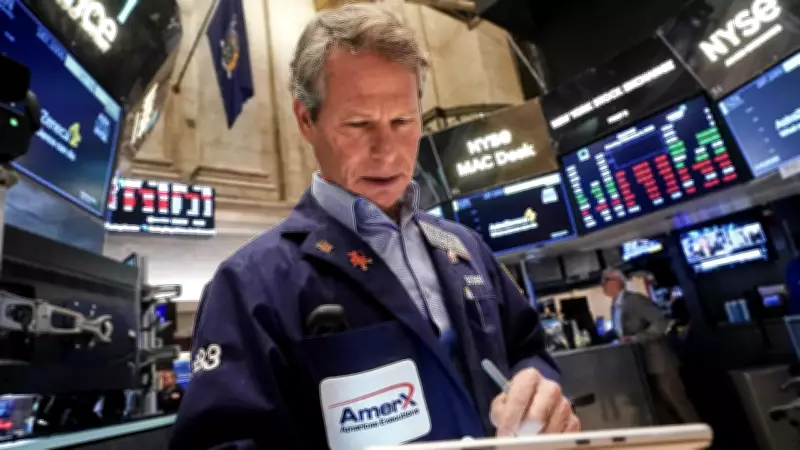
The S&P 500 index surged by an impressive 2.4%, reflecting broad-based investor optimism. Meanwhile, the Dow Jones Industrial Average jumped a staggering 1,332 points, or 2.9%, and the Nasdaq Composite climbed 2.9% during early trading sessions. These gains were not isolated to Wall Street; they tracked strong performances across European and Asian markets, indicating a synchronized global relief rally.
The rally was directly triggered by Trump's decision to pull back from further escalation with Iran, a move made shortly before a critical deadline for reopening the Strait of Hormuz. This strategic waterway is a key global oil transit route, and its potential closure had been a major concern for markets worldwide.

Oil Prices Experience Steep Correction
Oil markets reacted with a steep correction as geopolitical tensions eased. The US benchmark crude, West Texas Intermediate (WTI), fell sharply by 17.7% to settle at $92.92 per barrel. Similarly, Brent crude, the international benchmark, dropped 16.1% to $91.68 per barrel. This decline marked a significant reversal from earlier spikes, where prices had surged above $119 per barrel amid peak war concerns and fears of supply disruptions.
Despite these sharp gains in equity markets, analysts caution that levels remain below pre-war benchmarks. Persistent risks loom if tensions flare up again, which could disrupt oil flows and keep energy prices elevated, potentially derailing the current market optimism.
Global Market Reactions and Analyst Insights
Global markets rallied in tandem with the US, showcasing widespread relief. In Asia, South Korea's Kospi index rose 6.9%, Japan's Nikkei 225 gained 5.4%, and Hong Kong's Hang Seng climbed 3.1%. European markets followed suit, with Germany's DAX advancing 4.9% and France's CAC 40 rising 4.7%.
On Wall Street, companies sensitive to fuel costs led the gains. United Airlines jumped 12%, Delta Air Lines rose 8.2% after reporting stronger-than-expected earnings, and Carnival surged 13.7%, highlighting the direct impact of lower oil prices on transportation and leisure sectors.
Analysts provided mixed perspectives on the ceasefire's implications. Takashi Hiroki, chief strategist at MONEX, noted, "There is a reason to be optimistic, but it is still too early to tell, because, as you know, after all, it is Trump." This sentiment underscores the uncertainty surrounding the durability of the ceasefire and whether it will lead to sustained stability in energy markets.
Brian Jacobsen, chief economic strategist at Annex Wealth Management, added, "Is it just kicking of the can down the road, moving the goalposts, TACO Tuesday, or whatever metaphor we'd like, to only to have tempers flare and bombs drop again?... Who knows? But it's good enough for now to elicit a positive response from the markets." His comments highlight the cautious optimism prevailing among investors, who are welcoming the reduced immediate uncertainty but remain wary of future geopolitical risks.
Bond Market and Federal Reserve Implications
In the bond market, US Treasury yields eased as cooling oil prices raised expectations that the Federal Reserve could resume rate cuts. The 10-year yield fell to 4.26% from 4.33%, reflecting increased investor confidence in a more dovish monetary policy stance. According to CME Group data, traders now see nearly a 39% chance of rate cuts in 2026, as easing energy prices reduce inflation risks and provide the Fed with more flexibility.

Future Outlook and Market Sensitivities
However, oil markets remain highly sensitive to developments around the Strait of Hormuz. Future price trends will largely depend on how smoothly tanker traffic resumes and whether geopolitical tensions remain contained. Any resurgence in conflict could quickly reverse the current gains, underscoring the fragile nature of the ceasefire and its impact on global energy supplies.
In summary, while the announcement of a two-week ceasefire has provided a temporary boost to stock markets and a relief to oil prices, the long-term stability of these gains hinges on the durability of the geopolitical calm. Investors are advised to monitor the situation closely, as the markets' positive response may be tested by future developments in US-Iran relations.





