

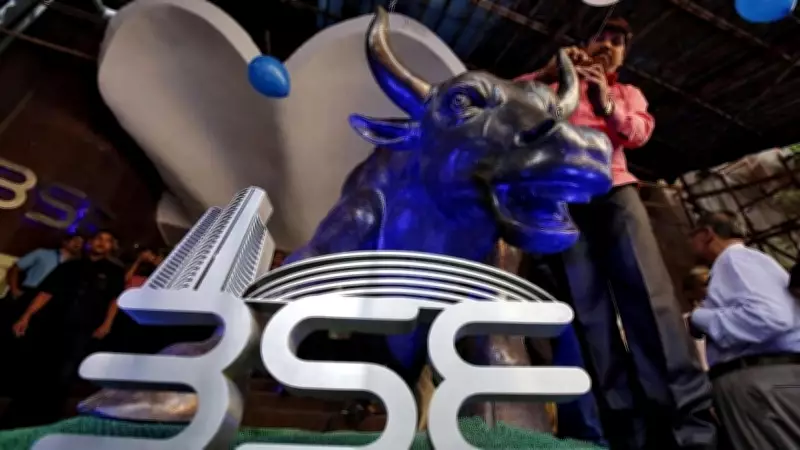
Indian Stock Market Witnesses Sharp Decline Amid Global Tensions
In a significant downturn, the Indian stock market experienced a steep fall during early trading hours on Thursday, March 13, 2026. The benchmark equity indices, Sensex and Nifty, recorded substantial losses, reflecting heightened investor anxiety over escalating geopolitical issues in West Asia.
Market Performance Details
The BSE Sensex plummeted by a staggering 708.38 points, while the NSE Nifty dropped by 222.05 points. This sharp decline marks one of the most notable trading sessions in recent months, with both indices closing deep in the red. The market sentiment was heavily influenced by external factors, particularly the surge in crude oil prices, which have been rising due to the intensifying crisis in West Asia.
Impact of Crude Oil Prices
The sharp rise in crude oil prices has been a primary driver behind this market slump. As tensions in West Asia escalate, global oil markets have reacted with increased volatility, leading to higher costs for energy imports in India. This, in turn, has raised concerns about inflation and economic stability, prompting investors to adopt a cautious approach. The correlation between oil price hikes and stock market performance is well-documented, and this instance underscores the vulnerability of emerging markets like India to global geopolitical events.

Broader Market Implications
The downturn in Sensex and Nifty is not an isolated event but part of a broader trend affecting global financial markets. Key factors contributing to this include:
- Geopolitical Uncertainty: The crisis in West Asia has created uncertainty, impacting investor confidence worldwide.
- Economic Pressures: Rising oil prices can lead to increased production costs and inflationary pressures, affecting corporate earnings and stock valuations.
- Market Volatility: Such events often trigger short-term volatility, as seen in the early trade figures, with the Sensex tumbling over 800 points at one point during the session.
Expert Analysis and Future Outlook
Financial analysts suggest that while the immediate impact is severe, the long-term effects will depend on how the West Asia situation evolves. Investors are advised to monitor developments closely and consider diversifying their portfolios to mitigate risks. The Indian stock market has shown resilience in the past, but ongoing global tensions could continue to pose challenges in the coming weeks.
In summary, the sharp decline in Sensex and Nifty highlights the interconnectedness of global markets and the significant influence of geopolitical events on financial stability. As the situation in West Asia remains fluid, market participants should stay informed and prepared for potential fluctuations.






