

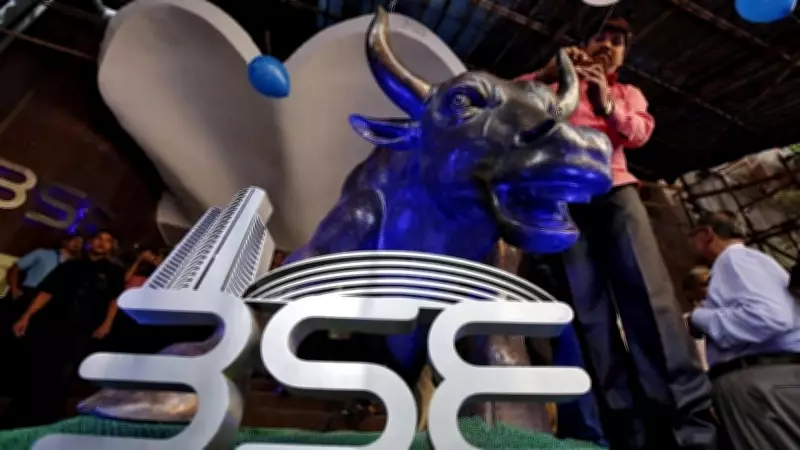
Indian Stock Markets Extend Losses for Second Consecutive Session
The Indian equity markets witnessed a sharp decline for the second straight day, as investors grappled with the dual pressures of surging crude oil prices and escalating geopolitical tensions in West Asia. The benchmark indices recorded significant losses, reflecting heightened risk aversion in the financial markets.
Sensex and Nifty Experience Steep Declines
The 30-share BSE Sensex tanked a substantial 829.29 points, or 1.08%, to settle at 76,034.42. During the trading session, the index experienced an even steeper plunge, dropping 992.53 points or 1.29% to hit an intraday low of 75,871.18. This downward movement underscores the intense selling pressure that dominated market sentiment throughout the day.
The broader NSE Nifty also mirrored this bearish trend, closing with notable losses as the market breadth remained overwhelmingly negative. The consistent decline over two sessions highlights the growing concerns among investors regarding external economic factors impacting domestic financial stability.

Key Drivers Behind the Market Sell-Off
The primary catalysts for this extended market downturn include:
- Soaring Crude Oil Prices: Global crude oil prices have been on an upward trajectory, raising fears of inflationary pressures and potential impacts on India's import bill and current account deficit.
- West Asia Turmoil: Escalating geopolitical tensions in the West Asia region have introduced significant uncertainty, prompting investors to adopt a cautious approach and reduce exposure to riskier assets.
- Broader Economic Concerns: These external shocks have compounded existing worries about global economic slowdowns and their ripple effects on emerging markets like India.
Market analysts note that the combination of these factors has led to a flight to safety, with many participants liquidating equity holdings in favor of more stable investment avenues.
Market Outlook and Investor Sentiment
The consecutive days of losses have dampened investor sentiment, with volatility expected to persist in the near term. Experts suggest that the market's direction will heavily depend on developments in international crude oil markets and the geopolitical landscape in West Asia.
Investors are advised to monitor these external variables closely, as they are likely to continue influencing market movements in the coming sessions. The resilience of the Indian economy and corporate earnings will also play a crucial role in determining whether the markets can recover from this downturn.
As of the latest update on 12 March 2026, the market remains under pressure, with traders awaiting further cues from global events and domestic economic indicators to gauge the next phase of movement.






