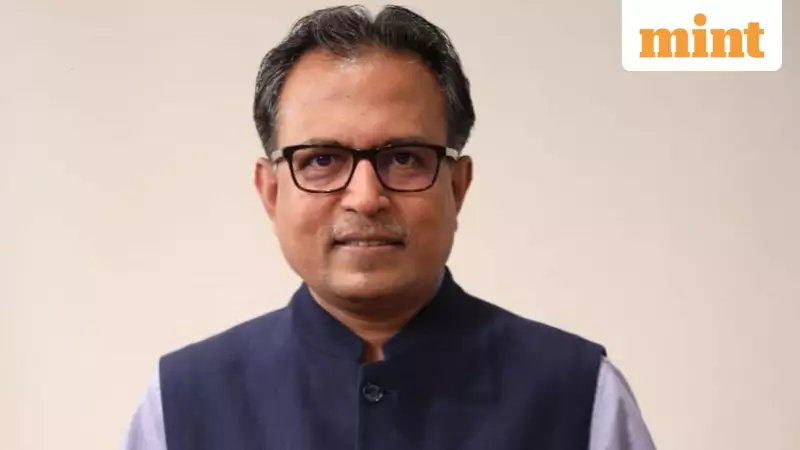
In an exclusive conversation, Nilesh Shah, Managing Director of Kotak Mahindra Asset Management Company, provided a tempered yet strategic outlook for Indian investors looking ahead to 2026. Shah emphasized that after a period of correction, the extreme valuation excesses in the market may be in the rearview mirror, but investors should calibrate their expectations for the coming year.
Market Outlook: Selective Gains Over Broad Rally
Shah pointed out that while headline indices are near record levels, the market breadth tells a different story. Approximately 73% of stocks within the Nifty 500 index are trading more than 10% below their 52-week highs, with mid-cap and small-cap segments bearing the brunt of the correction. This, coupled with six consecutive quarters of single-digit earnings growth for the Nifty 50, has led to sustained selling by Foreign Institutional Investors (FIIs), whose ownership has dwindled to around 15.6%.
He believes a turnaround is on the horizon. "We believe earnings growth is bottoming out and is likely to rebound into double digits in the coming year," Shah stated. However, he cautioned that returns in 2026 will likely be driven by selective participation in specific sectors and stocks, rather than a widespread market surge. Large-cap valuations are around historical averages, mid-caps at a marginal premium, but small-caps still trade at a substantial premium, necessitating a cautious approach.

Investment Strategy and Sectoral Preferences
Outlining a clear strategy for the coming year, Shah advised a neutral stance on mid-caps and an underweight position on small-caps. He warned investors against chasing past performance, suggesting that expecting the extraordinary returns of the last five years from these segments would lead to disappointment. Realistic expectations should be set for high single-digit to low double-digit returns over time.
From a sectoral perspective, Shah is optimistic about financial services, given improving growth prospects, and the consumer discretionary space. He reasoned that government measures have increased disposable income for taxpayers, consumers, and borrowers, and the impending 8th Pay Commission will further boost the wallets of government employees. As essential spending takes up a smaller portion of rising incomes, expenditure on discretionary items is expected to climb. Banking, e-commerce, and healthcare also look attractive from a 12-month view.
Shah also noted that a favourable tariff deal with the US could trigger a relief rally, potentially benefiting sectors like textiles, gems & jewellery, and aquaculture.
Rupee, FIIs, and a Golden Budget Idea
On the depreciating Indian rupee, which has crossed 91 against the US dollar, Shah attributed the move to global dollar strength, capital outflows, and India's net short forward position. He highlighted that while headline foreign exchange reserves stand near $700 billion, net reserves after adjusting for forwards are closer to $635 billion, which could exert further pressure on the currency.
Regarding FII flows, Shah expects the intensity of selling to reduce in calendar year 2026. A decisive shift to buying is anticipated in FY27, driven by a rebound in double-digit earnings growth, a normalisation of India's valuation premium compared to China and other emerging markets, and a potential global capital rotation away from the United States.
For the upcoming Union Budget 2026, Shah proposed an innovative solution to balance fiscal prudence with the massive expenditure burden of the 8th Pay Commission. His key expectation is for the government to focus on monetising idle household gold and silver. "Defreezing these assets and bringing them into the financial system can raise government resources, support consumption and investment, and help meet fiscal targets without destabilising the macro framework," he explained. Success here, he hopes, would prevent a flattening of capital expenditure while supporting growth, especially if spending is directed towards domestic goods and services.