

Geopolitical Tensions and Oil Volatility to Dictate Indian Market Direction
Developments in the ongoing Middle East conflict and fluctuations in crude oil prices are poised to be the primary drivers for Indian equity markets this week, according to financial analysts. Investors are also closely monitoring the US Federal Reserve's upcoming interest rate decision, key inflation data, and foreign institutional investor (FII) fund flows following a severe selloff on Dalal Street.
Market Participants Brace for Heightened Volatility
Market participants are preparing for another turbulent week after Indian benchmarks recorded steep losses amid rising oil prices, a weakening rupee, and persistent FII outflows linked to the escalating US-Israel-Iran conflict. Ajit Mishra, Senior Vice President of Research at Religare Broking Ltd, emphasized that geopolitical developments will remain the critical factor to watch, as their direct impact on crude oil prices is likely to influence overall market direction.
"This week is packed with several important developments and data releases, both domestically and globally," Mishra stated. He noted that investors on the domestic front will focus on wholesale price inflation (WPI), balance of trade data, and foreign exchange reserves. Globally, attention will center on the US Fed's rate decision and the Federal Open Market Committee's economic projections.

Strait of Hormuz Disruption Keeps Markets on Edge
Analysts highlighted that the Strait of Hormuz will remain the biggest pressure point for markets, as any prolonged disruption to shipping could tighten oil supplies, stoke inflation fears, and damage risk appetite across Asia. Ponmudi R, CEO of Enrich Money, explained that the week ahead is expected to remain highly volatile, with market direction largely influenced by developments surrounding the ongoing conflict in the Middle East.
"Particular focus will remain on the Strait of Hormuz, a critical energy chokepoint, where any prolonged disruption to shipping could tighten global oil supplies, influence inflation expectations across Asia, and keep overall risk sentiment fragile," he added. The US-Israel-Iran conflict escalated from February 28 and has led to a blockade of the Strait of Hormuz, the main transit route for Gulf energy supplies.
Markets Reeling After Sharp Weekly Fall
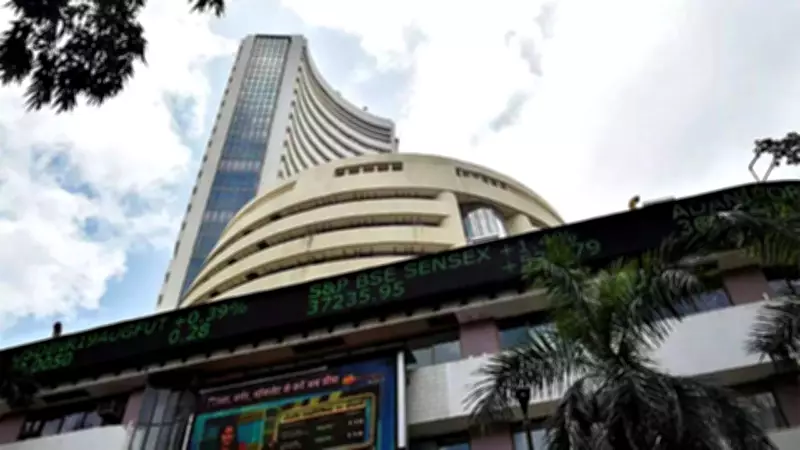
The caution comes after a brutal week for Indian equities. The BSE benchmark Sensex plunged 4,354.98 points, or 5.51 percent, last week, while the NSE Nifty dropped 1,299.35 points, or 5.31 percent. Since February 27, the 30-share BSE Sensex has slumped 6,723.27 points, or 8.27 percent.
Indian markets ended the week under significant corrective pressure as global risk sentiment deteriorated amid rising crude oil prices, escalating geopolitical tensions in the Middle East, and continued FII selling, according to Hariprasad K, Research Analyst and Founder of Livelong Wealth. On Friday alone, the Sensex fell 1,470.50 points, or 1.93 percent, to settle at 74,563.92, while the Nifty dropped 488.05 points, or 2.06 percent, to 23,151.10.
The rupee also weakened to a fresh record low of 92.45 against the US dollar, while Brent crude climbed to $100.7 per barrel, exacerbating market concerns.
FII Flows and Global Central Banks in Spotlight
Analysts said foreign investor activity and rupee movement will remain crucial indicators in the days ahead, as global capital allocation toward emerging markets like India stays sensitive to geopolitical tensions and commodity volatility. Foreign investors pulled out Rs 52,704 crore (approximately $5.73 billion) from Indian equities in the first fortnight of March amid Middle East tensions, rupee depreciation, and concerns over the impact of elevated crude prices on growth and corporate earnings.
Siddhartha Khemka, Head of Research for Wealth Management at Motilal Oswal Financial Services, noted that investors will also monitor key global data points, including Eurozone CPI, the Fed rate decision, and policy decisions from the Bank of England and European Central Bank, along with US jobs data.

With oil hovering near the $100-a-barrel mark and geopolitical uncertainty still high, Dalal Street is likely to remain highly sensitive to every new headline from the Middle East this week, underscoring the fragile state of market sentiment.





