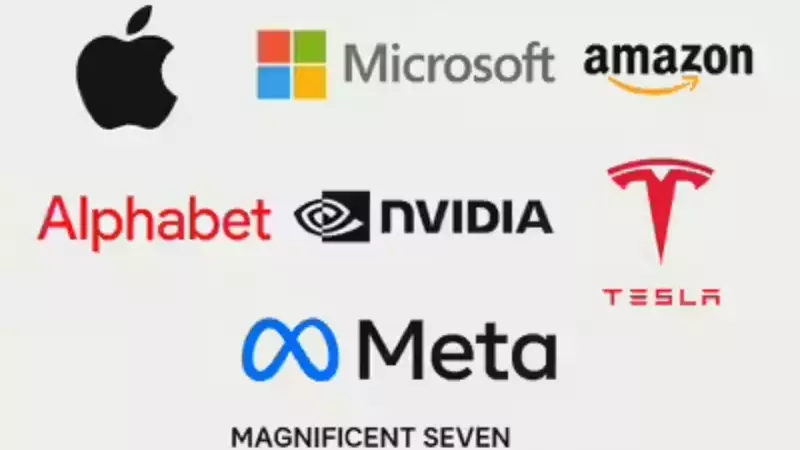
For years, a winning formula for investors seemed simple: buy and hold the largest US technology stocks. This strategy delivered exceptional returns, but in 2025, it finally hit a wall. The era of easy gains from simply owning the market's biggest tech names appears to be over, forcing a major shift in investment tactics.
The End of a Winning Streak
For the first time since the Federal Reserve began its cycle of interest rate hikes in 2022, a majority of the so-called Magnificent 7 tech giants performed worse than the broader S&P 500 index in 2025. This elite group, comprising Nvidia, Microsoft, Apple, Meta Platforms, Alphabet, Amazon, and Tesla, could no longer reliably outpace the market.
While the Bloomberg Magnificent 7 Index still posted a significant gain of 25% in 2025, compared to a 16% rise for the S&P 500, this headline figure was deceptive. The index's performance was driven almost entirely by the enormous gains of just two companies: Alphabet Inc. and Nvidia Corp.. The rest of the group struggled to keep up, signalling a breakdown in the monolithic movement of these stocks.

Why the Strategy is Stalling in 2026
Many Wall Street professionals anticipated this shift and see the dynamic continuing into 2026. Two primary factors are at play: a projected slowdown in profit growth and rising questions about the financial payoffs from the massive investments these companies are making in artificial intelligence.
The early data for 2026 confirms this cautious outlook. At the start of the year, the Magnificent 7 index has managed a gain of just 0.5%, while the S&P 500 has climbed a more robust 1.8%. This divergence underscores that investors can no longer treat these seven stocks as a single bloc.
The New Imperative: Stock Picking
The underperformance has made selective stock picking within the group crucial. The blanket approach of buying all mega-cap tech stocks is no longer a guaranteed path to beating the market.
"This isn't a one-size-fits-all market," stated Jack Janasiewicz, lead portfolio strategist at Natixis Investment Managers Solutions, which oversees a staggering $1.4 trillion in assets. His comment highlights the new reality where discerning between individual companies' prospects in AI, consumer demand, and innovation cycles is essential for success.
Investors are now forced to look deeper, analysing which companies are translating their heavy AI spending into tangible profits and sustainable growth, rather than relying on collective momentum. The game has changed from riding a wave to navigating individual currents.