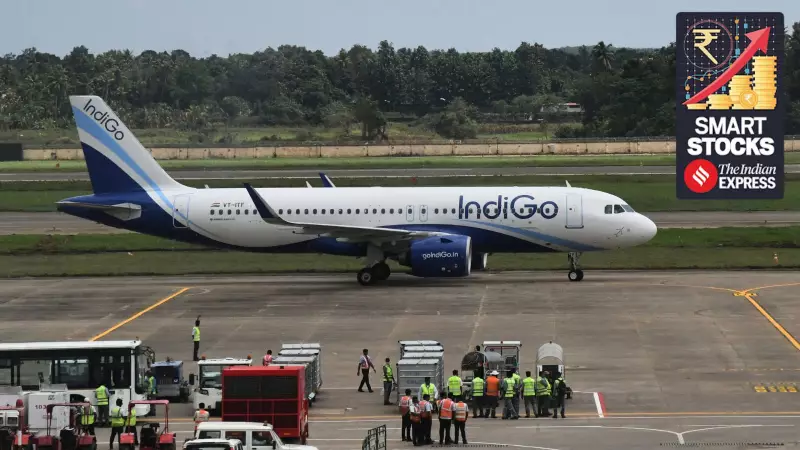
IndiGo's stock, a darling of the Indian markets, has hit severe turbulence. After soaring to an all-time high of Rs 6,232.5 on August 18, 2025, the airline's share price has nosedived below the Rs 5,000 mark. The trigger was a massive operational disruption in December 2025, which saw thousands of passengers stranded and the airline's reputation for punctuality severely dented. While flights have returned to normal, investor confidence has not, raising a critical question for the market: is this a temporary buying opportunity or a warning bell for structural issues?
The December Debacle: What Went Wrong?
The scale of the disruption was staggering. From operating over 2,200 daily flights in December 2024, IndiGo cancelled nearly 1,600 flights between December 1 and 15, 2025, and close to 4,500 over the entire month. This chaos caused the stock to plummet 18% in just 15 days, wiping out a significant portion of its 48% gain from the first eleven months of the year.
The airline pointed to the newly implemented Flight Duty Time Limit (FDTL) norms, which increased weekly pilot rest hours and reduced night landings. However, the government termed it an operational failure. A deeper look reveals a perfect storm: the FDTL rules coincided with a software update across IndiGo's A320 fleet, a nearly 10% increased winter schedule, and the peak holiday travel rush. This left the airline, which thrives on minimal aircraft ground time, with zero operational flexibility.

Beyond Pilots: The Real Financial Impact
While hiring more pilots to comply with FDTL norms may cost an estimated Rs 45-90 crore annually, the direct salary increase is not the core concern. The bigger issue is the opportunity cost. The pilot roster problem has forced a slowdown in IndiGo's aggressive network expansion, a key growth pillar.
This is evident in the airline's revised guidance. The Directorate General of Civil Aviation (DGCA) cut its winter flights by 10%, leading IndiGo to reduce its average seat kilometre growth forecast from high teens to high single or early double digits. More critically, the disruption hit during the seasonally strong third and fourth quarters, which typically drive annual profits.
Compounding these issues are external cost pressures. A depreciating rupee massively inflated maintenance costs, causing a foreign exchange loss of Rs 2,892 crore in Q2 FY26—a 1,102% year-on-year surge. Pratt & Whitney engine issues increased aircraft on ground (AOG), and the airline resorted to margin-diluting damp leases to meet demand, especially on international routes.
Long-Term Flight Path: Still Intact?
Despite the short-term turbulence, most analysts believe IndiGo's long-term narrative remains robust. The airline's structural advantages—a unified Airbus A320 fleet, a strong sale-and-leaseback model ensuring liquidity, and dominant market share—are unchanged.
Its growth catalysts are still in play: an order for 30 Airbus A350 wide-body aircraft for international expansion, a planned Rs 1,000 crore MRO facility in Bengaluru to reduce future maintenance costs, and the vast, underserved Indian air travel market. International expansion will also provide a natural hedge against forex volatility.
Brokerage views reflect this dichotomy between near-term pain and long-term promise. While firms like Prabhudas Lilladher and Investec have turned cautious or bearish, others like Jefferies, UBS, and Citi maintain 'Buy' ratings with price targets implying a 23-33% upside from current levels. They see the current correction as a potential entry point for investors with a long-term horizon.
Investor Takeaway: Turbulence vs. Crash
The December crisis exposed vulnerabilities in IndiGo's ultra-lean operational model. The coming quarters will see margin pressure from damp leases, forex losses, and moderated revenue growth, likely impacting the crucial Q3 EBITDAR. Regulatory scrutiny on airline duopoly and potential pro-passenger policies add to the overhang.

However, for bulls, the core investment thesis is not broken. The correction has brought the stock's valuation closer to reality from its stratospheric highs. The crisis is viewed more as a severe but manageable operational hiccup rather than a structural flaw. The airline's crisis management and expected operational stabilisation by February 10, 2026, are key monitors. For now, the market's verdict seems to be that this is turbulence to navigate, not a reason to abandon the flight.