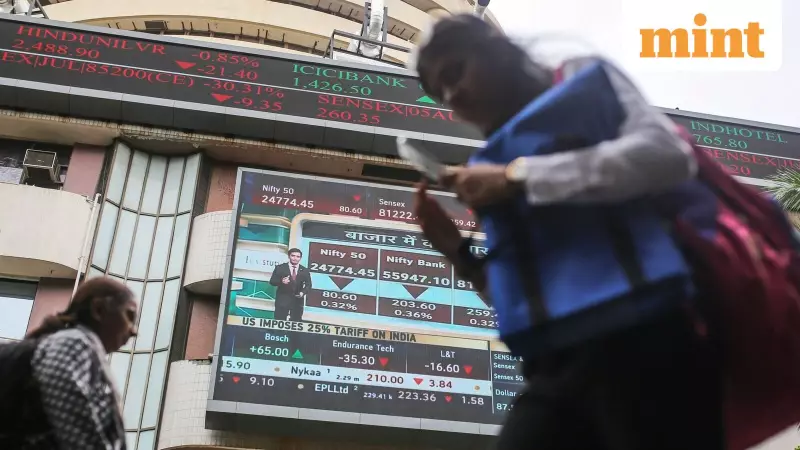
The year 2025 proved to be a challenging period for investors in the Indian equity markets, marking a phase of significant consolidation after previous years of strong gains. A combination of external trade pressures, massive foreign fund outflows, and a sharp decline in the rupee's value tested market sentiment. Meanwhile, a spectacular rally in precious metals like gold and silver created a distinct sense of FOMO among participants. As the year closed, the focus shifted to 2026, with hopes pinned on corporate earnings, supportive policies, and a resilient macroeconomic foundation to script a recovery.
A Year of Underperformance and External Shocks
The Indian stock market recorded its worst relative performance compared to other emerging markets in nearly three decades during 2025. Benchmarks like the Sensex and Nifty, which rose 9% and 10% respectively, were significantly outpaced by major global indices. For instance, South Korea's KOSPI, Hong Kong's Hang Seng, and the US S&P 500 delivered staggering double-digit gains of up to 72%.
A primary catalyst for this underperformance was a aggressive trade policy move from the United States. Former US President Donald Trump imposed a steep 50% tariff on Indian exports, one of the highest rates globally. This tariff action cast a long shadow over the markets, contributing to record foreign institutional investor (FII) outflows and severe pressure on the Indian currency.

The exodus of foreign money reached unprecedented levels. In calendar year 2025, FIIs were net sellers of Indian equities worth a staggering ₹158,407 crore, marking the most severe selling since they began investing in the country. This relentless selling was a key driver behind the rupee's sharp depreciation throughout the year.
Key Domestic Developments and Macro Resilience
Amidst the turmoil, the Indian rupee breached a critical psychological barrier, sliding past 91 against the US dollar to hit a record low of 91.14 in December 2025. With an annual decline of nearly 6%, it was the worst-performing currency in Asia. Analysts linked any potential rebound to progress in US-India trade negotiations.
On a brighter note, the domestic primary market witnessed a historic milestone. Fundraising through mainboard initial public offerings (IPOs) soared to a record ₹1.75 lakh crore in 2025. This achievement was driven by several high-value public issues, with eight major IPOs alone accounting for 44% of the total capital raised from 103 listings.
The government also provided a fiscal boost through the implementation of GST 2.0, which involved a rationalisation of tax rates. This move aimed to stimulate consumption, offering a near-term demand push for sectors like automobiles, consumer goods, and manufacturing, with potential long-term benefits for corporate earnings growth.
Geopolitical events significantly influenced specific sectors. Operation Sindoor – precision strikes by the Indian Armed Forces in May 2025 – acted as a key trigger for defence stocks. Coupled with ongoing instability in regions like Ukraine and the Middle East, it propelled the defence index to a sharp 17% gain in a volatile year for broader equities.
Contrasting Trends and the Path Ahead for 2026
While equities struggled, precious metals delivered an extraordinary performance, outshining all other asset classes. Silver prices skyrocketed by 165% and gold surged 82% in 2025, marking their best annual gains since 1979. Analysts attributed this rally to robust industrial and investment demand, tight inventories, geopolitical tensions, and expectations of US interest rate cuts.
India's macroeconomic fundamentals, however, displayed remarkable strength. GDP growth accelerated above 8%, reaching multi-quarter highs in the second quarter. Simultaneously, inflation fell sharply, with headline CPI dropping from 5.5% in November 2024 to just 0.3% by October 2025, dipping below the Reserve Bank of India's target band.

This favourable mix of robust growth and low inflation enabled the RBI to shift its monetary policy stance. The central bank implemented a cumulative rate cut of 125 basis points between January and December 2025, marking its first rate reduction in five years.
As the market looks towards 2026, optimism is being rekindled by upgrades in rating outlooks from several global brokerages. Experts like Dr. VK Vijayakumar, Chief Investment Strategist at Geojit Investments, believe that improvements in fundamentals, robust GDP growth, and better corporate earnings prospects are likely to attract net FII inflows in the new year, setting the stage for a potential recovery.
Disclaimer: This analysis is for informational purposes only. The views expressed are those of individual analysts. Investors are advised to consult certified experts before making any investment decisions, as market conditions are subject to change.